


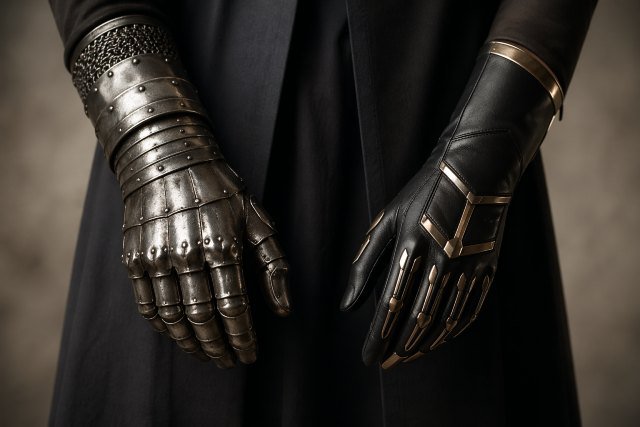
Gauntlets have traveled a long way from the battlefield to the wardrobe. What began as hand protection built into medieval armor has grown into a broader idea that now includes protective work gloves, dramatic fashion gloves, and cuffed styles that still carry a hint of strength and ceremony. Merriam-Webster defines a gauntlet first as a glove worn with medieval armor, but it also notes later meanings, including protective gloves and dress gloves extending above the wrist.
- What Are Gauntlets?
- Gauntlets in Medieval Armor
- How Medieval Gauntlets Were Made
- Why Gauntlets Mattered in Battle
- The Symbolic Meaning of the Gauntlet
- From Armor to Dress: How the Meaning Shifted
- Gauntlets in Modern Fashion
- Why Designers Keep Returning to Gauntlet-Inspired Looks
- Gauntlets Beyond Fashion
- How to Style Gauntlets Today
- Are Gauntlets Still Relevant?
- Final Thoughts on Gauntlets
That evolution is part of what makes gauntlets such an interesting subject today. They sit at the crossroads of military history, craftsmanship, symbolism, and style. In one context, a gauntlet was a practical piece of steel meant to save a hand in combat. In another, it became a sign of elegance, authority, or bold fashion styling. Modern designers still revisit glove-heavy looks because they communicate drama, polish, and a slightly armored attitude. Vogue and InStyle have both highlighted the continued return of statement gloves and armor-like glove styling on runways and red carpets.
If you have ever wondered what gauntlets really are, how they worked in medieval armor, and why the term still feels relevant in fashion, design, and pop culture, this guide will walk you through it in a clear and practical way.
What Are Gauntlets?
At the most basic level, gauntlets are protective or extended gloves designed to shield the hand, wrist, and sometimes part of the forearm. In medieval Europe, they were made as part of armor systems to protect fighters during combat. Over time, the word broadened and came to describe heavy-duty gloves used in work settings and long, dramatic gloves used in dress and fashion. That wider definition helps explain why the same word can sound equally at home in a museum, a workshop, or a runway review.
The word also carries symbolic weight. The older custom of “throwing down the gauntlet” comes from the use of a glove or gauntlet as a challenge in combat culture. A Cambridge reference on medieval terminology notes that a glove or gauntlet could serve as a gage of battle, which is where the challenge meaning developed.
So when people talk about gauntlets today, they may mean one of three things. They may mean armored hand protection from history. They may mean protective workwear with a long cuff. Or they may mean a fashion glove with structure, length, or visual drama. The shared thread is protection, presence, and form.
Gauntlets in Medieval Armor
In medieval and Renaissance armor, hand protection was crucial. A soldier could not effectively wield a weapon, hold a shield, or control a horse without functional hands. That made the gauntlet one of the most practical parts of a full armor system. Museums such as The Met and the Royal Armouries preserve examples showing how seriously armorers treated this part of the body.
Early hand protection was often simpler and less fully articulated than later examples. Over time, armorers developed increasingly sophisticated gauntlets that balanced defense and movement. Some were mitten-style, covering the fingers together for stronger protection. Others became more articulated, with separate finger plates and overlapping metal sections that allowed better dexterity. The Royal Armouries describes mitten gauntlets on Henry VIII’s foot combat armour, while The Met’s surviving pieces show how specialized and refined hand armor became by the late medieval and Renaissance periods.
A strong gauntlet had to solve a difficult problem. It needed to guard the fingers, knuckles, back of the hand, and wrist against cuts or blows while still allowing the wearer to grip a weapon. That is why many historic gauntlets used articulated plates, flared cuffs, and carefully layered construction. In museum examples, the cuff often extends outward to protect the wrist and lower forearm while leaving enough room for movement.
Gauntlets were not only practical. They were also works of craftsmanship. The Met’s late Renaissance gauntlet for Don Alonzo Pérez de Guzman el Bueno is described as elaborately chiseled and damascened, showing that elite armor could be decorative as well as defensive. This reminds us that armor was often status display in addition to military equipment. A nobleman’s gauntlets could communicate wealth, taste, and rank just as clearly as they offered protection.
How Medieval Gauntlets Were Made
Historic gauntlets were usually constructed from shaped metal plates, often steel, combined with leather, textile, and fastening elements. The plates overlapped to let the hand bend, while inner linings and straps helped secure the piece to the wearer. The Met’s catalog records for surviving gauntlets list materials such as steel, leather, textile, silver, and gold, depending on the object and its decorative level.
The making of a gauntlet required both engineering and artistry. Armorers had to shape metal to match the hand’s movement, not just its outline. Knuckles needed room. Fingers had to close. The wrist had to pivot. This was not a simple metal shell. It was wearable mechanics made by hand, centuries before modern industrial design became a discipline.
That craftsmanship is one reason gauntlets remain visually powerful in the modern imagination. Even when people do not know the technical details, they recognize the object as something precise, protective, and made with purpose.
Why Gauntlets Mattered in Battle
A sword strike to the hand could end a fight quickly. Even if a wound was not fatal, it could make it impossible to hold a weapon or defend properly. Gauntlets helped reduce that risk. Their job was to protect one of the body’s most vulnerable working parts without turning it useless. The continued development of hand guards and gauntlets in edged-weapon culture shows how central hand protection was to survival in combat.
Different fighting styles also shaped design choices. A heavily armored combatant on foot or horseback might prioritize stronger coverage, while a different weapon setup could demand more flexibility. This is why museum collections show variation rather than one universal model. Gauntlets changed over time, across regions, and according to the armor’s purpose.
In other words, gauntlets were not accessories added at the end. They were integral to how armor worked as a complete system.
The Symbolic Meaning of the Gauntlet
The gauntlet did more than protect the hand. It became a symbol. The phrase “throw down the gauntlet” survived long after armor disappeared from everyday life because the gesture captured challenge, bravery, and confrontation. A glove cast down publicly was not just fabric or metal. It was a statement.
That symbolic afterlife matters because fashion often feeds on symbols. Designers love objects that already carry emotional meaning. Gauntlets suggest control, authority, defiance, mystery, and elegance, depending on how they are styled. That helps explain why glove silhouettes return again and again in fashion cycles. They are not just useful. They tell a story.
From Armor to Dress: How the Meaning Shifted
As full plate armor faded from practical use, the word gauntlet did not disappear. Instead, it adapted. Dictionaries and usage records show that the term broadened to include protective gloves and dress gloves extending above the wrist. That semantic shift tracks with a larger cultural pattern: once an object becomes iconic, its name often survives in new forms that echo the original function or silhouette.
In fashion, the long cuff or extended wrist area is especially important. It keeps a visual memory of protection and structure, even when the material is no longer steel. Leather, satin, mesh, velvet, latex, and other textiles can all create gauntlet-like shapes. The result is softer, lighter, and more expressive, but the old association with strength remains.
This is why gauntlet-inspired gloves can feel both vintage and futuristic at the same time. They reference the past while looking dramatic enough for the present.
Gauntlets in Modern Fashion
Modern fashion rarely copies medieval armor directly for daily wear, but it often borrows the mood. Designers revisit gloves and gauntlet-like accessories when they want to add precision, theatricality, or a polished edge. Vogue noted that opera gloves became a major red-carpet and runway accessory in 2022, while street style coverage showed the look moving beyond formalwear into more experimental everyday styling.
That matters for understanding gauntlets today. In fashion language, the modern gauntlet is less about literal armor and more about silhouette. A fitted glove with a dramatic length, sculptural cuff, or protective feel can evoke the same visual logic. InStyle’s coverage of Irina Shayk’s 2026 Junya Watanabe runway look described a gown built from black gloves that created a hardened, armor-like texture. That is a clear example of fashion turning handwear into a statement about form, protection, and power.
The appeal is easy to understand. Gloves frame the hands, which are always visible in motion. They also change the whole impression of an outfit. A simple dress with long gloves can suddenly feel formal, cinematic, or commanding. A jacket paired with structured leather gauntlet-style gloves can feel utilitarian and fashion-forward at once.
Why Designers Keep Returning to Gauntlet-Inspired Looks
Fashion is cyclical, but it is not random. Designers return to gauntlet-inspired pieces because these shapes solve both aesthetic and emotional needs. Visually, they lengthen the arm, sharpen a silhouette, and add texture. Emotionally, they suggest control and self-possession. At times when fashion leans toward power dressing, historical references, or protective styling, gloves naturally come back into focus.
There is also a practical side. Gloves can bridge seasons, elevate eveningwear, and create contrast with bare shoulders, tailored coats, or minimalist dresses. A gauntlet cuff in leather can toughen up a soft outfit. A satin opera glove can formalize a look instantly. The historical echo gives the styling extra depth, even when the wearer is not consciously thinking about medieval armor.
Gauntlets Beyond Fashion
The word gauntlet still appears in protective wear outside style. Merriam-Webster includes industrial protective gloves in its definition, and that makes sense because long-cuffed gloves are still used where hands and wrists need shielding from heat, sparks, chemicals, or abrasion.
This broader use is helpful because it shows the original idea never truly disappeared. Whether the material is steel, leather, or a technical fabric, the core purpose remains the same: protect the hand while preserving as much function as possible. In that sense, modern work gauntlets are closer in spirit to medieval gauntlets than fashion versions are.
How to Style Gauntlets Today
If you want to bring gauntlets or gauntlet-inspired gloves into a modern wardrobe, the key is balance. The piece already has a strong visual identity, so the rest of the outfit does not need to compete. A sleek monochrome look can make long gloves feel elegant instead of costume-like. A structured coat paired with leather gauntlet gloves can lean modern and practical. For eveningwear, opera-length gloves remain one of the simplest ways to make an outfit feel polished and intentional. Recent fashion coverage suggests that gloves work especially well when they either match the outfit closely or create a sharp, deliberate contrast.
Texture also matters. Soft fabrics create refinement, while leather or sculptural materials create strength. If you are styling gauntlets for everyday wear, keep the silhouette clean. Let the gloves be the focal point rather than adding too many other dramatic elements.
Are Gauntlets Still Relevant?
Yes, and perhaps more than people realize. They remain relevant in museum collections, historical reenactment, costume design, runway fashion, red-carpet styling, protective workwear, and the language of symbolism itself. The object has changed, but the appeal has not disappeared. We still respond to the mix of function and drama that gauntlets represent.
In a culture that often cycles between softness and structure, gauntlets offer both. They protect, but they also perform. They belong to history, but they still look strikingly current when reinterpreted well.
Final Thoughts on Gauntlets
Gauntlets are one of those rare objects that make sense in multiple worlds at once. In medieval armor, they protected one of the body’s most important tools. In language, they became shorthand for challenge and courage. In modern fashion, they evolved into a dramatic accessory that still carries the visual memory of strength.
That is what makes Gauntlets more than just old armor or long gloves. They are a lasting design idea. From steel plates in museum collections to leather cuffs on runways, gauntlets continue to connect protection, craftsmanship, and style in a way that feels surprisingly modern.