


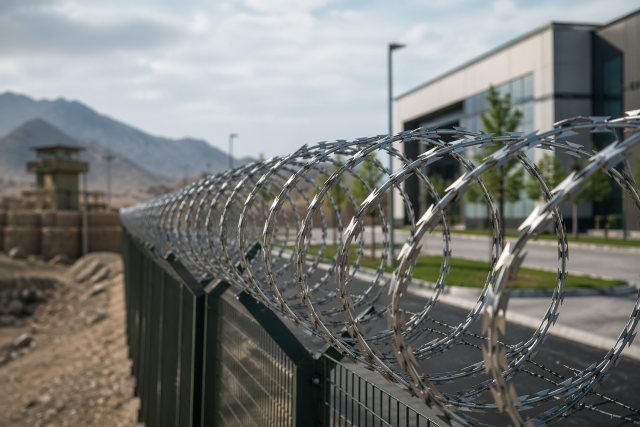
Concertina wire has come a long way from battlefield fortifications to modern perimeter security. At its core, concertina wire is a coiled barrier wire that expands like a concertina, creating a dense obstacle designed to slow, deter, and redirect intruders. Today, it is still associated with military and border control settings, but it is also used around industrial sites, ports, prisons, logistics yards, and certain high-risk commercial properties where layered security matters more than appearance alone.
- What Is Concertina Wire?
- The Military Origins of Concertina Wire
- How Concertina Wire Moved Into Civilian Security
- Why Concertina Wire Works So Well
- Concertina Wire in Modern Property Protection
- Safety, Legal, and Practical Considerations
- Is Concertina Wire Better Than Other Security Options?
- Final Thoughts on Concertina Wire
- FAQ: Common Questions About Concertina Wire
What makes concertina wire so relevant is not just its intimidating look. It works because it combines visibility, delay, and difficulty. Security guidance increasingly emphasizes that perimeter protection works best when physical barriers, signage, lighting, access control, and detection systems support each other rather than relying on one product alone. In that wider security picture, concertina wire is best understood as one barrier layer, not a standalone answer.
For property owners, facility managers, and anyone researching perimeter security, understanding concertina wire means looking at three things: where it came from, why it remains effective, and when it is or is not the right choice. That matters because the same product that makes sense for a prison, border checkpoint, or rail freight terminal may be a poor fit for a family home or any place where the public can easily come into contact with it.
What Is Concertina Wire?
Concertina wire is a type of barrier wire formed into large coils that can be compressed for transport and expanded during installation or deployment. In modern security settings, the term is often used alongside razor wire or barbed tape, though the exact wording varies by manufacturer and application. In practical terms, “concertina” usually describes the coiled configuration, while the cutting or piercing element may be barbed wire or razor-style tape depending on the product.
That distinction matters because many people use “concertina wire” and “razor wire” as if they mean exactly the same thing. They do overlap, but not perfectly. Razor wire refers more to the sharp-edged tape material itself, while concertina often refers to the expandable coil format used to create a deeper, harder-to-cross barrier. In other words, concertina wire is often a deployment shape as much as it is a material category.
This design gives it one major advantage over a single straight strand of security topping. A coiled barrier adds depth and entanglement. Instead of confronting one line, an intruder faces multiple loops that are awkward to grip, hard to separate, and psychologically off-putting before any physical contact happens. That combination of visual deterrence and physical delay explains why concertina wire remains common in high-security environments.
The Military Origins of Concertina Wire
The roots of concertina wire sit within the broader history of barbed wire and field fortification. Britannica notes that barbed wire became an important defensive aid, and during World War I, barbed-wire emplacements combined with trenches, machine guns, and artillery gave defenders a major advantage. On the Western Front, wire obstacles helped turn open ground into hazardous no-man’s-land, slowing frontal assaults and forcing attackers into exposed, predictable movement.
Trench warfare depended on layered defense, and wire was central to that system. Britannica’s trench warfare and World War I material explains that fortified trench lines used barbed wire extensively, because defense had become stronger than attack in the early years of the war. Wire was not meant to win a battle by itself. Its job was to hold up movement long enough for defending forces to respond with firepower. That logic still influences how modern security professionals think about perimeter barriers today.
Over time, wire obstacles evolved from relatively simple strands into more specialized and rapidly deployable forms. Patent material and later product development show concertina-style barbed tape becoming a more engineered solution, allowing coils to be clipped and held in shape to form a more stable barrier. That made transport easier, installation faster, and the final obstacle more formidable than plain agricultural-style barbed fencing.
So when people associate concertina wire with military zones, that reputation is well earned. It comes from a long history of using layered wire obstacles to control movement, protect defended lines, and create delay in places where breach attempts are expected rather than merely possible.
How Concertina Wire Moved Into Civilian Security
As security needs expanded beyond battlefields, many military-inspired perimeter tools found civilian uses. Concertina wire became common in prisons, border installations, ports, rail and freight sites, utilities, industrial compounds, and high-security commercial properties. Manufacturers and case studies in the security fencing sector repeatedly describe it as a topping or secondary barrier used to discourage climbing and strengthen an existing fence line.
Government use is still a major part of its identity. U.S. Customs and Border Protection materials describe concertina wire being used to harden parts of the southwest border and ports of entry during periods of increased security concern. These examples show that the product remains relevant where authorities need rapid deployment, high visibility, and strong deterrent value.
In the private sector, the move has been more selective. High-risk sites often use concertina wire on top of anti-climb mesh or other rated fencing, not as a decorative boundary but as part of a serious security envelope. National protective security guidance supports this broader approach by stressing that fences and gates should be selected as part of a risk-based, integrated system. That means physical obstacles, portals, signs, lighting, detection, and response planning should work together.
Why Concertina Wire Works So Well
Concertina wire works because it creates more than one kind of resistance. First, it is an immediate visual warning. Many would-be intruders will avoid a site that clearly looks difficult, painful, and time-consuming to enter. Second, it adds physical delay. Even where someone is determined, the coils create awkward movement and reduce speed. Third, it increases exposure time, which is critical when a site also uses CCTV, patrols, lighting, alarms, or perimeter intrusion detection.
This is why modern security practice usually treats it as one layer in a layered perimeter. NPSA guidance notes that intrusion detection systems work best when combined with physical barriers, and its perimeter advice highlights rated fencing, limited portals, signage, patrols, and surveillance as complementary measures. In real-world terms, concertina wire is most effective when it helps create delay long enough for detection and response to matter.
Another reason for its continued use is flexibility. Some versions can be installed permanently as fence toppings, while others are suited to temporary or rapidly strengthened perimeters. That makes concertina-style barriers useful in both planned infrastructure protection and short-notice security hardening.
Concertina Wire in Modern Property Protection
In modern property protection, concertina wire is most appropriate where the threat level is meaningful and the perimeter has to prioritize deterrence over appearance. Typical examples include industrial yards, warehouses, logistics depots, energy sites, transport facilities, data-adjacent infrastructure, and secure compounds where theft, trespass, sabotage, or organized intrusion are genuine concerns. Security providers commonly position it as a topping above high-security fencing rather than as a first choice for ordinary residential boundaries.
That is an important line to draw. Police advice in West Yorkshire explicitly says barbed or razor wire on top of a home fence is not advisable because occupiers may create civil liability if someone is injured, including trespassers. Local authority guidance on rights of way also warns against dangerous barbed wire placement where the public may encounter it. In the countryside code guidance for land managers, the advice is to use plain wire if the public is likely to come into contact with a fence, gate, or stile.
So while people sometimes ask whether concertina wire is good for home security, the better question is whether it is appropriate, lawful, and proportionate. For many homes, the answer is no. Better options often include stronger gate hardware, anti-climb fence design, thorny defensive planting, lighting, cameras, locks, and clear sightlines. Secured by Design, for example, recommends practical boundary heights and landscaping measures for homes rather than aggressive perimeter hazards.
Safety, Legal, and Practical Considerations
Concertina wire is effective partly because it can cause serious injury. That reality creates legal and operational responsibilities. Where the public could approach a boundary, installers and occupiers must think carefully about warning signs, placement height, and duty of care. Product guidance from Zaun notes that warning signs should be installed along a fence line, citing the Occupiers’ Liability Act 1984 and the Highways Act 1980.
There is also a plain safety issue beyond liability. Cuts and contaminated wounds can create infection risks, and both WHO and CDC guidance on tetanus emphasize that tetanus can enter through cuts or wounds and that proper wound cleaning and vaccination status matter after such injuries. That does not make concertina wire unique, but it does underline why it should never be treated casually.
From a planning perspective, another practical point matters: visible security measures can deter, but they can also send a message about the kind of site being protected. On a logistics hub or restricted compound, that may be perfectly acceptable. On customer-facing commercial premises, hospitality sites, schools, or upscale residential developments, the look may be too severe unless the risk profile clearly justifies it. Good security design is not only about strength. It is also about context, legitimacy, and how a site functions day to day.
Is Concertina Wire Better Than Other Security Options?
That depends on the threat and the environment. If the goal is maximum deterrence and a strong anti-climb perimeter for a restricted site, concertina wire can be highly effective. If the goal is attractive, low-liability, family-friendly residential protection, it is often the wrong answer. Modern security thinking favors matching the barrier to the risk, then supporting it with lighting, surveillance, controlled access, and response capability.
For many properties, anti-climb mesh, controlled entry points, monitored cameras, and good lighting provide a more balanced solution. Where concertina wire is used, it usually works best as a reinforcing element on top of a properly designed fence rather than as the only defense. That is one reason high-security case studies often pair it with mesh systems, detection layers, and formal perimeter design rather than presenting it as a magic fix.
Final Thoughts on Concertina Wire
Concertina wire remains one of the most recognizable perimeter security tools in the world because it still does the job it was designed to do: deter, delay, and complicate unwanted entry. Its military heritage shaped its reputation, but its modern use in ports, prisons, industrial compounds, borders, and selected commercial sites shows that it has evolved into a practical security product for risk-sensitive environments.
At the same time, concertina wire is not a universal answer. The best security decisions are proportionate decisions. If a site has real exposure to trespass, theft, or organized intrusion, concertina wire may be a strong addition to a layered perimeter strategy. If the location is residential, publicly accessible, or sensitive from a liability and appearance standpoint, less hazardous measures are often the smarter choice. In that sense, the story of concertina wire is really the story of modern security itself: effective protection depends not on the harshest-looking barrier, but on choosing the right measure for the right place.
FAQ: Common Questions About Concertina Wire
What is concertina wire used for?
Concertina wire is used to strengthen perimeter security by creating a visible and difficult-to-cross barrier. It is commonly found at military installations, borders, prisons, ports, industrial sites, and other high-security properties.
Is concertina wire the same as razor wire?
Not exactly. In modern security usage, razor wire usually refers to the sharp tape material, while concertina often refers to the expandable coiled format. The terms are often used together because many concertina barriers are made from razor-style tape.
Is concertina wire legal for homes?
It depends on local law and site conditions, but it is often discouraged for homes because of safety and liability concerns. Police and local guidance in the UK warn that dangerous wire barriers can expose property owners to legal risk if someone is injured.
Does concertina wire work on its own?
It can deter on its own, but security guidance shows it works best as part of a layered system that includes fencing, signage, lighting, CCTV, and intrusion detection.