


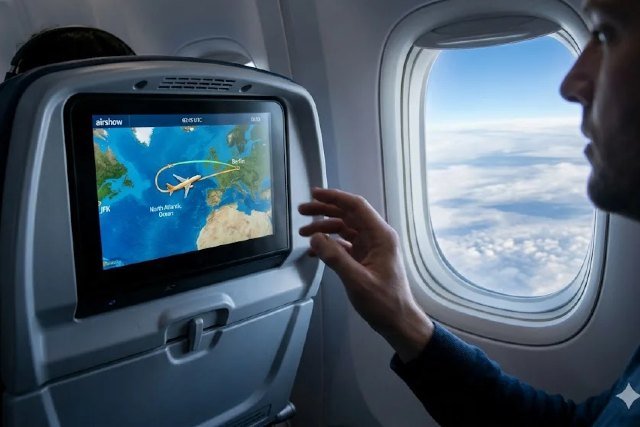
The Delta DL93 Diversion caught attention because it involved a long-haul transatlantic flight from Berlin to New York JFK turning around before continuing across the Atlantic. For passengers, a diversion can feel worrying in the moment. For pilots and airlines, though, it is often a careful safety decision made before a situation becomes more serious.
- What Happened During the Delta DL93 Diversion?
- Why Did Delta DL93 Turn Around?
- Delta DL93 Diversion and the Safety Logic Behind It
- Why London Heathrow Instead of Berlin?
- Was Delta DL93 in Danger?
- The Aircraft: Boeing 767 on a Transatlantic Route
- How Diversions Affect Passengers
- What Travelers Should Do During a Diversion
- Why Diversions Are Common on Long-Haul Flights
- Delta DL93 Diversion: What We Know and What We Do Not Know
- Why the Delta DL93 Diversion Became News
- Passenger Rights After a Flight Diversion
- Final Thoughts on the Delta DL93 Diversion
- FAQs About the Delta DL93 Diversion
Based on publicly available aviation tracking reports, Delta Air Lines flight DL93 departed Berlin Brandenburg Airport for New York JFK on August 25, 2025. While cruising near Ireland at around 32,000 feet, the Boeing 767-400ER turned around and diverted to London Heathrow instead of continuing toward New York. Aviation outlet AIRLIVE reported that the reason was still not officially confirmed at the time, but the diversion was “probably due to a technical issue” with the aircraft.
That detail matters. A flight turning around does not automatically mean there was panic, danger, or an emergency landing. In many cases, it means the crew noticed a warning, abnormal indication, or maintenance-related concern and chose the safest airport option before crossing a long oceanic route.
What Happened During the Delta DL93 Diversion?
Delta flight DL93 was operating from Berlin Brandenburg Airport to John F. Kennedy International Airport in New York. According to the AIRLIVE report, the flight departed Berlin at 09:29 CEST and was later cruising over the Dublin area when the aircraft turned around. The aircraft involved was identified as a Boeing 767-432ER with registration N832MH.
Instead of returning all the way to Berlin, the aircraft diverted to London Heathrow, one of Europe’s busiest and best-equipped international airports. AIRLIVE later updated that the aircraft touched down on runway 09L at Heathrow at 11:07 BST, and a new departure was being scheduled from Heathrow afterward.
That sequence suggests a controlled operational decision, not a chaotic emergency. The aircraft was already west of continental Europe, so London Heathrow made practical sense. It offered strong maintenance support, long runways, Delta handling capability through partner operations, and better onward travel options for passengers than a smaller diversion airport.
Why Did Delta DL93 Turn Around?
The most likely reason for the Delta DL93 Diversion was a technical or mechanical concern, but it is important to be careful with wording. Public reports did not confirm one final official cause. AIRLIVE stated that the reason was still unknown when the turnback occurred, while also noting that the airline likely diverted because of a technical issue involving the 24-year-old aircraft.
In aviation, “technical issue” can cover many things. It may involve an aircraft system warning, a maintenance indication, a sensor problem, pressurization concern, hydraulic issue, electrical fault, engine-related message, or another abnormal reading in the cockpit.
Not every technical issue means the aircraft is unsafe to fly immediately. But when a plane is about to cross the Atlantic, the decision becomes more conservative. A warning that might be manageable over land can become a bigger operational concern over oceanic airspace, where diversion airports are farther apart.
That is why turning toward London could be the smarter decision. The crew avoided committing to a long Atlantic crossing with a known abnormal indication. Instead, they landed at a major airport where technicians could inspect the aircraft properly.
Delta DL93 Diversion and the Safety Logic Behind It
A diversion is not a failure of the flight plan. It is part of the safety system.
SKYbrary, an aviation safety knowledge resource, defines a diversion as a situation where a pilot decides to land at an airport different from the original destination. It also explains that diversions may happen because of weather, airport closures, onboard medical issues, unruly passengers, fuel concerns, or system/component failures such as engine, electrical, pressurization, or hydraulic problems.
That definition helps explain DL93. The aircraft did not continue to JFK because the crew likely had a reason to avoid the long oceanic portion of the flight. When an issue appears before the Atlantic crossing, pilots and dispatch teams often look at the safest nearby airport with the right runway, weather, maintenance, and passenger support.
London Heathrow checks many of those boxes. It is a major long-haul hub with strong emergency response capabilities, aircraft maintenance access, and the infrastructure to handle wide-body aircraft like the Boeing 767.
Why London Heathrow Instead of Berlin?
Many readers naturally ask: if the flight started in Berlin, why not return to Berlin?
The answer is usually position, practicality, and safety. Once DL93 was already near Ireland, London Heathrow was closer or more operationally suitable than returning all the way to Germany. A pilot does not always choose the departure airport during a diversion. The crew chooses the airport that best fits the situation.
That decision can depend on weather, runway length, available maintenance, airline support, fuel calculations, air traffic control coordination, and passenger handling. SKYbrary also notes that pilots may gather information from air traffic services and the operator before making the final diversion decision.
For a Boeing 767 on a transatlantic route, Heathrow would be a logical option. It has long runways, experienced ground crews, strong technical support, and direct access to replacement aircraft or rebooking options.
Was Delta DL93 in Danger?
There is no public evidence from the available reports that passengers were in immediate danger. The available information points more toward a precautionary diversion than a dramatic emergency.
That distinction is important. Aviation headlines often use phrases like “turned around,” “diverted,” or “forced to land,” which can make a situation sound more frightening than it was. In reality, many diversions are calm cockpit decisions made early.
A flight crew does not need to wait for a serious failure before diverting. If a system warning appears, the safer choice may be to land at a major airport and let maintenance teams inspect the aircraft. That is especially true before flying several hours over the Atlantic.
In simple terms, the DL93 diversion appears to show aviation safety working as designed. The crew noticed something that required caution, changed the plan, and landed safely.
The Aircraft: Boeing 767 on a Transatlantic Route
The aircraft reported in the incident was a Boeing 767-400ER. AIRLIVE identified the registration as N832MH and described the aircraft as 24 years old at the time of the diversion.
Aircraft age alone does not mean an airplane is unsafe. Commercial aircraft are maintained under strict inspection schedules. Older aircraft can safely operate for many years when properly maintained. However, older long-haul aircraft may require more frequent maintenance attention, and technical interruptions can happen.
The Boeing 767 has been a common transatlantic aircraft for decades. Airlines use it on routes where the passenger demand fits a mid-size wide-body jet. Delta has long operated 767 aircraft across the Atlantic, including services between Europe and the United States.
For passengers, the key point is this: a technical issue on an older aircraft does not automatically mean a serious failure. It often means a system needs inspection before the aircraft can continue safely.
How Diversions Affect Passengers
For passengers, a diversion can create stress, missed connections, hotel confusion, and uncertainty. Someone flying Berlin to JFK may have plans in New York, onward domestic flights, work meetings, or family arrangements. A diversion to London interrupts all of that.
In this case, AIRLIVE reported that a new departure from Heathrow was being scheduled after the aircraft landed. That kind of update usually means the airline is trying to continue the journey after inspection, aircraft replacement, or operational clearance.
Passengers should keep all boarding passes, receipts, hotel confirmations, food receipts, and communication from the airline. For international itineraries, the U.S. Department of Transportation notes that passengers may be able to seek reimbursement under Article 19 of the Montreal Convention for expenses caused by delayed or canceled flights by filing a claim with the airline.
That does not mean every passenger automatically receives compensation. It depends on the cause, route, delay length, airline policy, local rules, and whether the airline took reasonable measures. Still, passengers should document everything.
What Travelers Should Do During a Diversion
The first thing passengers should do is stay calm and listen for crew instructions. Flight attendants may not always have the full technical explanation immediately. In many cases, even passengers are told only that the aircraft is diverting for a “technical reason” or “operational reason.”
After landing, passengers should check the airline app, airport screens, text messages, and email updates. Rebooking information often appears digitally before it is announced at the gate.
Travelers should also avoid leaving the secure area unless told to do so. On international diversions, immigration and reboarding rules can be complicated. Walking away too early may create problems if the airline boards passengers again quickly.
If a long delay follows, passengers should ask Delta staff about meal vouchers, hotel arrangements, onward connections, baggage handling, and written confirmation of the delay. It is also wise to photograph airport screens and save all app notifications.
Why Diversions Are Common on Long-Haul Flights
Long-haul flights involve more planning than short domestic flights. A Berlin-to-JFK route crosses multiple airspaces and then the North Atlantic. Before entering oceanic airspace, aircraft crews and dispatchers are especially careful about fuel, weather, alternates, aircraft systems, and route restrictions.
If a possible technical issue appears while the aircraft is still near Europe, there is a strong safety reason to solve it before the ocean crossing. Once the aircraft is over the Atlantic, diversion options become fewer and farther apart.
This is not unique to Delta. Airlines around the world make similar decisions when a cockpit warning or abnormal condition appears before a remote portion of the route. The goal is not to finish the trip at all costs. The goal is to finish it safely, even if that means inconvenience.
Delta DL93 Diversion: What We Know and What We Do Not Know
What we know is that Delta DL93 was operating from Berlin to New York JFK, turned around near Ireland, and diverted to London Heathrow. We also know the aircraft landed at Heathrow and that the aircraft was identified in aviation reports as a Boeing 767-432ER registered N832MH.
What we do not know from the public record is the exact confirmed technical fault. Public aviation tracking reports can show where an aircraft flew, where it landed, and sometimes the likely reason. But the final maintenance finding usually comes from the airline, aircraft maintenance logs, or an official investigation if one is required.
That is why responsible reporting should avoid claiming a specific failure unless Delta or an aviation authority confirms it. The safest wording is that DL93 appears to have diverted because of a suspected or probable technical issue before continuing across the Atlantic.
Why the Delta DL93 Diversion Became News
The story became interesting because it involved a well-known airline, a major international route, a wide-body aircraft, and a transatlantic turnback. Flight diversions also attract public attention because they are visible on tracking websites and often shared quickly on aviation social media.
Flight tracking platforms such as FlightStats show DL93 as Delta’s Berlin-to-New York JFK service, with regular scheduled operations between BER and JFK. That context helps readers understand that DL93 is not a random one-off flight number. It is part of Delta’s transatlantic network.
For aviation enthusiasts, the route, aircraft type, timing, and diversion airport all matter. For regular travelers, the bigger question is simpler: was the flight safe, and why did it not continue to New York?
The answer is that the flight appears to have diverted as a precaution, most likely because continuing across the Atlantic was not the best safety decision after a suspected technical issue.
Passenger Rights After a Flight Diversion
Passenger rights can vary depending on the ticket, departure airport, destination, airline, reason for delay, and local laws. Since this flight departed from Berlin and was heading to the United States, passengers may look at airline assistance rules, European passenger protections, U.S. Department of Transportation guidance, and the Montreal Convention for certain international delay-related expenses.
The DOT’s Fly Rights page explains that passengers on international itineraries may be able to recover reimbursement for expenses from delays or cancellations under Article 19 of the Montreal Convention by filing a claim with the airline.
For passengers, the practical step is simple: collect proof. Keep receipts, screenshots, boarding passes, delay notices, and any written communication from Delta. If a claim is submitted later, documentation makes the case stronger.
Final Thoughts on the Delta DL93 Diversion
The Delta DL93 Diversion was disruptive for passengers, but the available information suggests a careful safety decision rather than a dramatic emergency. The Berlin-to-JFK flight turned around near Ireland and diverted to London Heathrow, with reports pointing to a probable technical issue involving the Boeing 767-400ER aircraft.
A diversion is never convenient. It can mean missed plans, long airport waits, and uncertainty. But in aviation, caution is not a weakness. It is the system working properly.
When a crew chooses to land at a major airport before crossing the Atlantic, the message is clear: safety comes before schedule. For DL93 passengers, that meant an unexpected stop in London instead of a direct arrival in New York. For the airline and crew, it meant making the conservative choice while they still had strong airport options nearby.
FAQs About the Delta DL93 Diversion
What was the Delta DL93 Diversion?
The Delta DL93 Diversion refers to Delta Air Lines flight DL93 from Berlin to New York JFK turning around near Ireland and diverting to London Heathrow on August 25, 2025. The aircraft landed safely at Heathrow.
Why did Delta DL93 turn around?
The exact official cause was not publicly confirmed in the available report. Aviation reporting suggested the flight probably diverted because of a technical issue with the aircraft.
Was the Delta DL93 diversion an emergency?
Public reports do not clearly show that it was a major emergency. It appears more consistent with a precautionary diversion before the aircraft continued across the Atlantic.
Where was Delta DL93 flying?
DL93 was operating from Berlin Brandenburg Airport to New York John F. Kennedy International Airport. FlightStats lists DL93 as Delta’s Berlin-to-New York service.
What should passengers do after a diversion?
Passengers should save receipts, monitor airline updates, ask about rebooking or hotel support, and keep written proof of the delay. For international trips, reimbursement may be possible in some cases under the Montreal Convention, according to U.S. DOT guidance.