

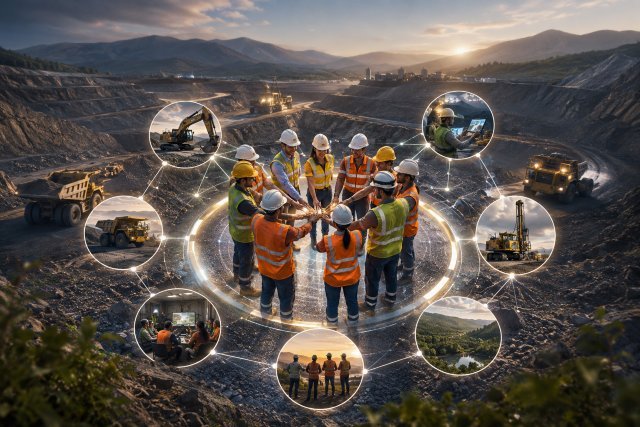
Maschinenring Mining is an emerging idea built around a simple but powerful question: what if mining companies, quarry operators, contractors, and local service providers could share machinery, labour, maintenance support, and technical services through a cooperative network instead of every operator carrying the full cost alone?
- What Is Maschinenring Mining?
- Why the Maschinenring Model Matters for Mining Services
- The Core Idea Behind Maschinenring Mining
- Maschinenring Mining and the Cost Problem in Modern Mining
- How Maschinenring Mining Could Work in Practice
- Key Services a Maschinenring Mining Network Could Offer
- Why Smaller Mining Operators Could Benefit Most
- Sustainability Benefits of Maschinenring Mining
- The Role of Digital Platforms in Maschinenring Mining
- Safety and Liability: The Biggest Challenge
- Maschinenring Mining vs Equipment Rental
- Maschinenring Mining vs Contract Mining
- Real-World Scenario: How the Model Could Help a Quarry
- Where Maschinenring Mining Could Grow First
- Risks and Limitations of Maschinenring Mining
- Actionable Tips for Building a Maschinenring Mining Model
- Future Outlook: Could Maschinenring Mining Change Mining Services?
- FAQs About Maschinenring Mining
- What does Maschinenring Mining mean?
- Is Maschinenring Mining an official company?
- How is Maschinenring Mining different from equipment rental?
- Who benefits most from Maschinenring Mining?
- Is Maschinenring Mining sustainable?
- Conclusion
The term is inspired by the well-established Maschinenring model, which began in agriculture. A Maschinenring is traditionally a machinery ring where members coordinate access to equipment and labour so expensive assets are used more efficiently. The first Maschinenring was founded in Buchhofen, Lower Bavaria, in 1958, and the model grew into a network supporting farms through shared machinery and labour coordination.
In mining, the same idea could become highly relevant. Equipment is expensive, skilled workers are hard to find, downtime is costly, and smaller operators often struggle to compete with companies that own large fleets. That is why Maschinenring Mining could become more than a buzzword. It could become a practical model for smarter, leaner, and more flexible mining services.
What Is Maschinenring Mining?
Maschinenring Mining refers to the application of the machinery-ring cooperative model to mining, quarrying, aggregates, site preparation, hauling, rehabilitation, and support services.
Instead of one mining operator buying every excavator, loader, drilling machine, haul truck, surveying tool, and specialist service it may need, a group of approved members could coordinate access to shared resources. These resources might include heavy equipment, trained operators, maintenance crews, safety consultants, environmental specialists, fuel logistics, and emergency backup teams.
The original Maschinenring model does not usually mean that the central organization owns all the machines. In the agricultural version, the ring often acts as an intermediary. Individual members, contractors, or syndicates own equipment, while the ring helps match demand with available capacity. A Maschinenring Foundation document describes machinery rings as agricultural self-help organizations that belong to their members and help make cost-intensive machinery more productive.
That same structure could fit parts of the mining sector, especially where equipment demand is seasonal, project-based, or uneven.
Why the Maschinenring Model Matters for Mining Services
Mining is capital-heavy. Even a modest quarry or regional extraction business may need access to machines that are expensive to buy, maintain, insure, transport, and staff.
Large operators can spread those costs across many sites. Smaller operators often cannot. They may delay equipment upgrades, overuse older machines, or rely heavily on rental companies when they need extra capacity.
This is where Maschinenring Mining services could create a middle path. It would not be the same as ordinary equipment rental, and it would not be the same as full outsourcing. It would sit between ownership, contracting, and cooperation.
A cooperative mining ring could help members share underused machines, fill labour gaps, reduce idle time, and create a more reliable local service network. This matters because equipment utilization is one of the key drivers of productivity in mining. Research on mining productivity has repeatedly highlighted the importance of equipment management, material flow, and operational coordination.
The Core Idea Behind Maschinenring Mining
At its heart, Maschinenring Mining is about turning scattered resources into a coordinated service network.
One company may own a loader that sits unused for several days a week. Another may need that exact loader for a short-term project but cannot justify buying one. A third company may have trained operators available between contracts. A maintenance provider may have spare capacity during certain weeks. A cooperative model connects these needs.
In a traditional market, every company solves these problems separately. In a Maschinenring-style model, the network becomes the organizer.
The result could be better asset use, lower capital pressure, faster access to skilled help, and more predictable service availability.
Maschinenring Mining and the Cost Problem in Modern Mining
The mining sector faces rising cost pressure from equipment prices, fuel, labour, regulation, safety requirements, environmental obligations, and technology upgrades.
The global contract mining services market is also growing, which shows that more operators are already looking outside their own balance sheets for mining support. Research Nester estimates the contract mining services market at USD 19.36 billion in 2026, with projected long-term growth through 2035.
That does not prove that Maschinenring Mining will automatically become mainstream. But it does show a clear market direction: mining companies are increasingly open to flexible service models.
The cooperative model could be especially useful for small and mid-sized operators that need professional support but do not want to surrender control of their operations to one large contractor.
How Maschinenring Mining Could Work in Practice
A practical Maschinenring Mining cooperative could be built around a digital coordination platform and a local governance structure.
Members would register machines, services, availability, certifications, insurance details, maintenance records, location, and operating conditions. Other members could request equipment or services through the network.
For example, a small quarry might need a mobile crusher for two weeks. A nearby contractor may own one that is not being used during that period. The cooperative verifies the machine, operator credentials, safety requirements, transport plan, and pricing. The job is scheduled, completed, recorded, and billed through the ring.
This is different from informal borrowing. The model would need professional rules, transparent pricing, clear liability, safety documentation, and service-level expectations.
Without structure, the idea becomes risky. With structure, it could become a serious mining services platform.
Key Services a Maschinenring Mining Network Could Offer
A mining-focused machinery ring could include more than machine sharing. It could support several practical service areas.
The most obvious area is equipment access. Excavators, loaders, graders, haul trucks, crushers, screeners, drills, water trucks, generators, survey drones, and specialized attachments could be listed in the network.
The second area is labour coordination. Skilled operators, mechanics, welders, surveyors, safety officers, environmental technicians, and blasting support teams are often difficult to secure at short notice.
The third area is maintenance and repair. Shared preventive maintenance teams could help reduce downtime, especially for smaller operators that cannot afford large in-house workshops.
The fourth area is compliance support. Mining businesses often need help with safety documentation, environmental monitoring, rehabilitation planning, inspections, and training.
The fifth area is emergency backup. If a critical machine fails, a cooperative network could help locate replacement capacity faster than a company working alone.
Why Smaller Mining Operators Could Benefit Most
Large mining corporations already have procurement teams, fleet systems, maintenance departments, training programs, and contractor frameworks. They may still benefit from cooperative networks in remote or regional support areas, but they are not the most obvious first users.
The strongest early opportunity is likely in small mines, quarries, aggregates, construction-material extraction, regional contractors, and rehabilitation services.
These businesses often face a difficult choice. They either buy expensive machines that may sit idle, rent equipment at high short-term rates, or turn down jobs they cannot service properly.
Maschinenring Mining could give them access without forcing full ownership. It could also help local equipment owners earn income from machines that would otherwise be parked.
Sustainability Benefits of Maschinenring Mining
Sustainability in mining is not only about cleaner energy or lower emissions. It is also about using resources more efficiently.
A machine that sits idle still represents embodied materials, manufacturing impact, storage cost, financing cost, and maintenance requirements. If a cooperative model allows fewer machines to serve more projects safely and efficiently, it may reduce unnecessary duplication.
That does not mean shared machinery automatically makes mining sustainable. Mining still has major environmental impacts. But better equipment utilization, coordinated transport, shared maintenance, and improved planning can reduce waste inside the service chain.
This is one reason the Maschinenring model is interesting. Its agricultural roots were built around making expensive machinery more useful across a wider group of users, not simply selling more machines.
The Role of Digital Platforms in Maschinenring Mining
A modern Maschinenring Mining system would need strong digital infrastructure.
Old-fashioned phone-based coordination may work for small local jobs, but mining services involve safety, compliance, scheduling, maintenance, and liability. A serious network would need digital records.
The platform should track machine availability, operator qualifications, inspection history, fuel use, job location, maintenance status, downtime, pricing, and insurance coverage.
Digital coordination is important because shared-resource systems can fail when trust is not supported by accurate data. Research on digital tractor-hire platforms found that digital tools can help improve access to mechanization, but the benefits depend heavily on transaction costs, service-provider capacity, and the wider operating environment.
The same lesson applies to mining. A cooperative model needs more than goodwill. It needs systems that make cooperation reliable.
Safety and Liability: The Biggest Challenge
The biggest obstacle for Maschinenring Mining is not the idea itself. It is risk.
Mining is a high-risk industry. Machines are large, sites are dangerous, and mistakes can lead to injury, production losses, environmental damage, or legal action.
So any cooperative mining model must answer hard questions.
Who is responsible if a shared machine fails on site? Who verifies the operator’s certification? Who checks maintenance records? Who carries insurance? Who investigates an incident? Who pays for damage? Who ensures the equipment is suitable for the specific ground conditions and job type?
These questions cannot be left vague. A mining-focused cooperative would need strict onboarding, documentation, safety audits, standard contracts, and clear operating procedures.
This is where the model becomes more complex than casual equipment sharing. To work in mining, Maschinenring Mining must behave like a professional services network, not a loose community arrangement.
Maschinenring Mining vs Equipment Rental
At first glance, Maschinenring Mining may sound like equipment rental. But the two models are not the same.
Equipment rental is usually a supplier-customer transaction. The rental company owns or controls the equipment, sets the terms, and rents it to users.
A Maschinenring-style model is more member-based. The network coordinates resources owned by different participants. One member may provide a machine today and request a different service tomorrow.
The cooperative logic is also different. The aim is not only to rent machines but to improve the local service ecosystem. That can include labour, training, maintenance, emergency support, and mutual economic benefit.
This member-driven structure is what gives the model its potential power.
Maschinenring Mining vs Contract Mining
Contract mining usually means hiring a specialist company to perform mining operations or major parts of them. This can work well, especially for large projects, but it may reduce flexibility for smaller operators.
Maschinenring Mining could offer a more modular approach. A business may not want to outsource the entire operation. It may only need a crusher, a haulage crew, a mechanic, or rehabilitation support for a short period.
That makes the model attractive for operators that want professional help without giving up operational control.
Real-World Scenario: How the Model Could Help a Quarry
Imagine a regional quarry that has a sudden increase in demand for road-base material after a local infrastructure project begins.
The quarry has enough reserves and staff, but its old crusher cannot keep up. Buying a new unit would be expensive, and renting from a distant supplier would involve transport delays.
Through a Maschinenring Mining network, the quarry finds a nearby contractor with a mobile crusher available for ten days. The cooperative verifies machine condition, insurance, operator credentials, and site safety requirements. The contractor earns income from idle equipment. The quarry meets demand without buying a machine it may not need all year.
This is the kind of situation where the cooperative model becomes practical.
Where Maschinenring Mining Could Grow First
The model is most likely to grow in areas where mining activity is local, equipment demand is uneven, and companies already know one another.
Regional quarrying is a strong candidate. Aggregates, sand, gravel, limestone, and construction-material extraction often involve local supply chains and variable demand.
Mine rehabilitation is another good fit. Rehabilitation work may require specialized machines and environmental services for limited periods.
Exploration support could also benefit. Smaller exploration companies may need access to drilling support, site vehicles, survey tools, and field crews without building a permanent fleet.
Municipal and infrastructure-related extraction services may also fit the model, especially where contractors, farmers, transport providers, and machinery owners already overlap.
Risks and Limitations of Maschinenring Mining
Maschinenring Mining is promising, but it is not a magic solution.
It may not work well for every type of mining. Large continuous operations often require dedicated fleets, strict production schedules, integrated maintenance systems, and highly specialized equipment. In those cases, shared access may be less practical.
The model can also create scheduling conflicts. If many members need the same machine at the same time, the network needs fair priority rules.
Quality control is another issue. Not every equipment owner maintains machines to the same standard. Not every operator has the same skill level. A cooperative model must set minimum requirements and enforce them.
There is also the risk of unclear branding. Since Maschinenring is strongly associated with agriculture, writers and businesses should be careful not to present “Maschinenring Mining” as an official global mining organization unless a specific registered entity exists. At present, it is better understood as an emerging concept inspired by the machinery-ring model.
Actionable Tips for Building a Maschinenring Mining Model
A mining cooperative should begin with a narrow service area rather than trying to cover everything at once.
The first step is to map local demand. Which machines are frequently needed but underused? Which services are hard to find? Which operators face repeated downtime?
The second step is to create membership standards. Machines should have maintenance records, operators should have verified credentials, and members should agree to safety rules.
The third step is to build transparent pricing. A cooperative network fails when members feel rates are unfair or hidden.
The fourth step is to use digital scheduling from the beginning. Even a simple platform is better than scattered messages and manual records.
The fifth step is to involve insurers, safety experts, and legal advisors early. Mining risk must be designed into the model, not added later.
Future Outlook: Could Maschinenring Mining Change Mining Services?
Maschinenring Mining could change the future of mining services by making cooperation more formal, local, and data-driven.
It will not replace major mining contractors. It will not remove the need for equipment rental companies. It will not solve every labour or cost problem.
But it could give smaller operators a stronger way to compete. It could help equipment owners earn more from idle assets. It could improve regional service resilience. It could also encourage better maintenance, documentation, and planning across fragmented mining markets.
The future of mining services may not be only about bigger machines or bigger contractors. It may also be about smarter networks.
FAQs About Maschinenring Mining
What does Maschinenring Mining mean?
Maschinenring Mining means applying the cooperative machinery-ring model to mining services. It focuses on shared access to equipment, labour, maintenance, and technical support.
Is Maschinenring Mining an official company?
Not necessarily. The term is best understood as a concept inspired by the Maschinenring cooperative model. The traditional Maschinenring network is rooted in agriculture and machinery sharing.
How is Maschinenring Mining different from equipment rental?
Equipment rental is usually a commercial rental transaction. Maschinenring Mining would be a member-based cooperative model where participants can both provide and use machinery or services.
Who benefits most from Maschinenring Mining?
Small and mid-sized mines, quarries, aggregates companies, contractors, machine owners, and regional service providers could benefit most.
Is Maschinenring Mining sustainable?
It can support more efficient resource use by reducing idle equipment, improving planning, and avoiding unnecessary duplication. However, it must still follow strong environmental and safety standards.
Conclusion
Maschinenring Mining is a practical idea with strong potential because it addresses one of mining’s biggest challenges: how to access expensive equipment and skilled services without carrying the full burden of ownership.
The original Maschinenring model shows how shared machinery, labour coordination, and member-based cooperation can help industries use resources more efficiently. In mining, that same thinking could support smaller operators, regional quarries, contractors, rehabilitation projects, and service providers.
The model will only work if it is professional. Safety, insurance, maintenance records, digital scheduling, transparent pricing, and clear governance are essential.
If those foundations are in place, Maschinenring Mining could become a smarter cooperative path for the future of mining services.