


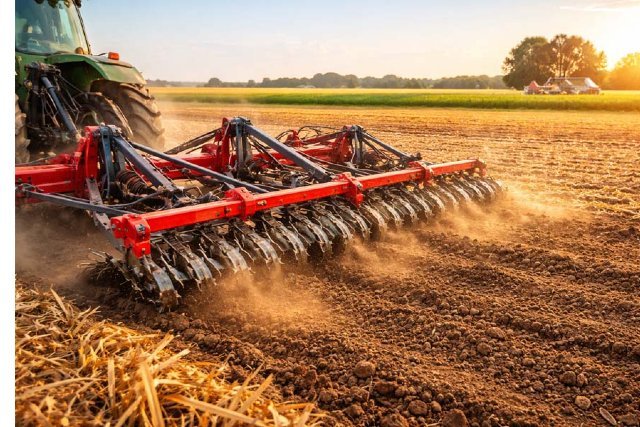
Modern farming is becoming more precise, efficient, and focused on soil health. Among the many tools helping farmers achieve these goals, the Messeregge stands out as a surprisingly simple yet highly effective solution. Designed to prepare seedbeds, manage crop residue, and improve field conditions, a Messeregge can help create the ideal environment for strong crop establishment.
- What Is a Messeregge?
- Why Seedbed Quality Matters
- How a Messeregge Works
- Key Benefits of Using a Messeregge
- Better Seedbed Preparation
- Reduced Soil Disturbance
- Improved Residue Management
- Enhanced Moisture Retention
- Lower Fuel Consumption
- Messeregge and Sustainable Farming
- Real-World Example
- Messeregge vs Traditional Harrows
- Common Crops That Benefit from Messeregge Use
- Tips for Getting the Best Results
- Adjust Working Depth Carefully
- Monitor Blade Condition
- Match Speed to Conditions
- Avoid Excessively Wet Soil
- Frequently Asked Questions About Messeregge
- What does Messeregge mean?
- Is a Messeregge suitable for conservation agriculture?
- Can a Messeregge improve crop yields?
- Does a Messeregge reduce fuel consumption?
- Is a Messeregge useful for weed control?
- Conclusion
Whether you operate a small farm or manage hundreds of acres, understanding how a Messeregge works can help you improve efficiency, reduce unnecessary field passes, and potentially boost crop performance. In an era where every percentage point of yield matters, the right soil preparation tool can make a significant difference.
What Is a Messeregge?
A Messeregge is a specialized agricultural implement often referred to as a knife harrow or blade harrow. The name comes from German agricultural terminology, combining the words “Messer” (knife) and “Egge” (harrow). Unlike traditional harrows that use tines or discs, a Messeregge relies on sharp blades that slice through the soil surface with minimal disturbance. Sources describing modern Messeregge systems consistently highlight their precision-focused approach to soil preparation and residue management.
The primary goal is not deep cultivation. Instead, the tool works near the soil surface to create a smooth, uniform seedbed while preserving deeper soil structure.
This shallow working method has become increasingly valuable as farmers adopt conservation tillage and soil-friendly farming practices.
Why Seedbed Quality Matters
Before exploring the benefits of a Messeregge, it’s important to understand the role of seedbed preparation.
Seeds require several conditions for successful germination:
- Good seed-to-soil contact
- Consistent moisture availability
- Proper planting depth
- Minimal soil compaction
- Even field surface
Poor seedbed preparation often leads to uneven emergence, inconsistent crop development, and lower yield potential.
A well-prepared seedbed helps ensure that every seed has the best possible start.
How a Messeregge Works
The design of a Messeregge is relatively straightforward. Rows of steel blades are arranged across a rigid frame. As the implement moves across the field, these blades slice through the soil surface, crop residue, and small weeds.
Instead of aggressively turning the soil, the blades:
- Break surface crusts
- Cut residue into smaller pieces
- Level minor irregularities
- Create a finer soil texture
- Prepare the field for planting
Because the working depth is typically shallow, moisture loss is reduced compared to deeper tillage methods.
This approach supports both productivity and long-term soil health.
Key Benefits of Using a Messeregge
Better Seedbed Preparation
One of the most important advantages of a Messeregge is its ability to create a uniform seedbed.
When soil conditions are consistent across a field, seed placement becomes more accurate. This often leads to more uniform crop emergence and easier crop management throughout the growing season.
Uniform emergence is especially important for crops such as wheat, barley, corn, and oilseed rape.
Reduced Soil Disturbance
Many modern farming systems aim to minimize unnecessary soil disruption.
Traditional tillage can disturb soil structure, accelerate moisture loss, and increase erosion risk. A Messeregge focuses on surface cultivation while leaving deeper layers largely intact. Agricultural experts frequently note that blade harrows support soil conservation by reducing aggressive soil inversion.
Improved Residue Management
Crop residue plays an important role in soil health, but excessive residue can interfere with planting operations.
A Messeregge slices through residue and distributes it more evenly across the field. This promotes faster decomposition and creates a cleaner planting environment.
Residue management becomes particularly important in no-till and reduced-till systems.
Enhanced Moisture Retention
Water availability remains one of the biggest challenges in agriculture.
Because the Messeregge works at shallow depths, it helps preserve moisture stored deeper within the soil profile. Reduced soil disturbance often means less evaporation and better water conservation.
For farmers operating in dry or drought-prone regions, this can be a significant advantage.
Lower Fuel Consumption
Field operations represent a major expense for most farms.
Since a Messeregge requires less power than many deep tillage implements, fuel consumption is often reduced. Some integrated systems also allow multiple operations to be completed in a single pass, further improving efficiency. Various industry sources report that combining soil preparation tasks can save both time and fuel.
Messeregge and Sustainable Farming
Sustainability is becoming a central focus in modern agriculture.
Farmers are increasingly seeking methods that improve productivity while protecting natural resources. The Messeregge aligns well with several sustainable farming objectives:
- Soil conservation
- Reduced erosion risk
- Improved moisture retention
- Lower fuel use
- Better residue management
- Support for reduced-tillage systems
Research and practical field experience continue to show that minimizing unnecessary soil disturbance can improve long-term soil health.
Healthy soil remains one of the most valuable assets any farmer can possess.
Real-World Example
Consider a grain farmer preparing fields after harvest.
Traditionally, the farmer might make multiple passes with different implements to break residue, level the field, and prepare a seedbed.
By using a Messeregge integrated with other equipment, several of these tasks can often be completed simultaneously.
The result may include:
- Fewer tractor hours
- Lower fuel costs
- Reduced labor requirements
- More timely planting
- Improved crop establishment
Over multiple growing seasons, these efficiencies can translate into substantial savings.
Messeregge vs Traditional Harrows
Messeregge
- Blade-based cutting action
- Shallow cultivation
- Minimal soil disturbance
- Better moisture conservation
- Effective residue slicing
Traditional Harrow
- Tine or disc action
- Greater soil movement
- More aggressive mixing
- Higher risk of moisture loss
- Increased soil disturbance
Neither tool is universally superior. The best choice depends on crop type, soil conditions, and management goals.
However, for farmers focused on conservation practices, the Messeregge often provides distinct advantages.
Common Crops That Benefit from Messeregge Use
The Messeregge can be valuable across a wide range of cropping systems.
Common applications include:
- Wheat
- Barley
- Oats
- Corn
- Soybeans
- Oilseed rape
- Cover crops
Its ability to create a smooth seedbed while preserving soil structure makes it adaptable to many agricultural environments.
Tips for Getting the Best Results
Adjust Working Depth Carefully
The effectiveness of a Messeregge depends heavily on operating depth.
Working too deep may increase fuel use and unnecessary soil disturbance. Most applications perform best at shallow depths.
Monitor Blade Condition
Sharp blades deliver cleaner cuts and better field performance.
Regular inspection and replacement of worn blades help maintain efficiency.
Match Speed to Conditions
Operating speed influences cutting performance and soil finish.
Testing different speeds under field conditions can help determine the optimal setting.
Avoid Excessively Wet Soil
Even precision tools perform poorly in unsuitable conditions.
Working wet soils can create smearing and compaction issues that negatively affect crop establishment.
Frequently Asked Questions About Messeregge
What does Messeregge mean?
Messeregge is a German agricultural term that translates roughly to “knife harrow” or “blade harrow.” It refers to a soil cultivation tool that uses blades instead of traditional tines.
Is a Messeregge suitable for conservation agriculture?
Yes. Its shallow working depth and minimal soil disturbance make it well suited for conservation tillage and soil-friendly farming systems.
Can a Messeregge improve crop yields?
While no tool guarantees higher yields, improved seedbed quality, better moisture retention, and more uniform crop emergence can contribute to stronger crop performance.
Does a Messeregge reduce fuel consumption?
In many situations, yes. Because it requires less aggressive soil movement and can often reduce the number of field passes, fuel usage may be lower than with conventional tillage systems.
Is a Messeregge useful for weed control?
It can help manage small weeds by cutting them near the soil surface, especially when used as part of an integrated weed management strategy.
Conclusion
The Messeregge may appear simple, but its impact on field preparation can be significant. By creating a uniform seedbed, managing residue efficiently, preserving soil moisture, and reducing unnecessary soil disturbance, this practical tool supports both productivity and sustainability.
As farming continues to evolve, equipment that improves efficiency while protecting soil health will become increasingly valuable. For growers looking to optimize planting conditions and improve long-term field performance, a Messeregge remains a smart and effective addition to the modern agricultural toolbox.