


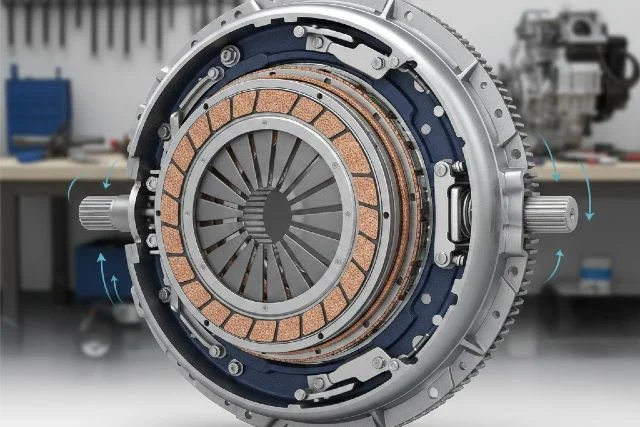
A Sintterikytkin is a sintered-metal clutch, usually chosen for performance cars, motorsport builds, and other high-torque applications where a standard organic clutch may start to slip. In simple terms, it is designed to transfer more torque, bite harder, and handle harsher use than a comfort-focused street clutch. Finnish performance parts sellers describe sintterilevy or sintterikytkin as a puck-style clutch option with a higher friction coefficient than organic clutch discs, which is why it is commonly used when stronger torque capacity is needed.
- What Is a Sintterikytkin?
- How a Sintterikytkin Works
- Why Drivers Upgrade to a Sintterikytkin
- Main Benefits of a Sintterikytkin
- The Downsides You Should Know
- Sintterikytkin vs Organic Clutch
- Best Use Cases for a Sintterikytkin
- Real-World Buying Tips Before You Choose One
- Common Questions About Sintterikytkin
- Is a Sintterikytkin good for daily driving?
- Does a Sintterikytkin hold more torque?
- Why does a Sintterikytkin feel harsh?
- Is it only for race cars?
- Final Verdict on Sintterikytkin
That extra performance comes with trade-offs. A Sintterikytkin usually engages more abruptly, feels less forgiving in daily traffic, and may not be the best match for every street-driven car. Manufacturer and racing supplier descriptions consistently note that sintered-metal clutch linings provide higher thermal resilience, stronger bite, and better resistance to dirt and oil than conventional organic linings, but they also create more aggressive engagement behavior.
So, is a Sintterikytkin a smart upgrade or an uncomfortable overkill? The right answer depends on how much torque your vehicle makes, how you drive it, and whether your priority is smooth drivability or maximum holding power. This guide explains what a Sintterikytkin does, how it works, its benefits and downsides, and when it makes sense in the real world.
What Is a Sintterikytkin?
In practical automotive language, Sintterikytkin refers to a clutch system that uses sintered-metal friction material instead of the more common organic lining. Many performance and motorsport products use segmented pads or puck-style contact surfaces rather than a full-face disc. That construction is a big reason these clutches can deliver fast, direct torque transfer under heavy load.
A standard organic clutch is usually designed to balance smooth engagement, comfort, and durability in everyday driving. A Sintterikytkin, by contrast, is built more around performance priorities such as torque capacity, heat resistance, and repeated hard launches. ZF SACHS product descriptions state that sintered-metal clutch linings have a higher coefficient of friction, higher rpm capability, and markedly higher thermal stability than organic discs.
That is why the term often appears in tuning, rally, drift, drag, and track-day discussions. It is not just a replacement part. It is usually an intentional upgrade for cars that have been modified for more power or driven in ways that place unusual stress on the clutch system.
How a Sintterikytkin Works
A clutch connects and disconnects engine power from the transmission. When you release the clutch pedal, the disc is clamped between the flywheel and pressure plate, allowing torque to pass through the gearbox. The friction material on the clutch disc determines how progressively or aggressively this power transfer happens.
In a Sintterikytkin, the friction surface is made from sintered metallic material. This material is engineered to maintain grip under high temperatures and high load. Because it has a stronger friction characteristic than many organic linings, it tends to grab faster and hold more torque before slipping. That is one reason racing and performance suppliers position sintered discs for competition, drag-style launches, and powerful engines.
Some sintterikytkin setups are sprung, while others are unsprung. A sprung hub uses damper springs to reduce shock through the drivetrain, which can improve drivability and help protect transmission components. Unsprung designs are usually even more direct and aggressive, which is why they are commonly associated with pure motorsport use. Finnish clutch sellers note that both sintered and organic discs can be found in sprung or unsprung form, and that the springing choice affects driveline harshness more than raw torque rating alone.
Why Drivers Upgrade to a Sintterikytkin
The most common reason is simple: more torque capacity. Once power and torque rise beyond the safe range of the stock clutch, slipping becomes a real risk, especially under boost, repeated launches, or track abuse. Performance clutch ranges marketed in Finland and by global manufacturers consistently position sintered options above organic ones for stronger torque holding.
Heat is the second big reason. Track sessions, aggressive hill runs, drag starts, and repeated high-load gear changes all generate friction heat. Sintered-metal linings are promoted for their thermal resilience and stable friction behavior under demanding conditions, which helps explain why they are so common in race-oriented systems.
The third reason is response. A Sintterikytkin generally engages faster than an organic clutch. In competitive driving, that sharp bite can be a benefit because it reduces the soft, elastic feel some drivers associate with street-focused setups. In launch-heavy environments, that directness can improve consistency when every fraction of a second matters.
Main Benefits of a Sintterikytkin
One major advantage is stronger holding power. Because the friction material is more aggressive, a Sintterikytkin can often manage substantially more torque than a stock-style organic clutch of similar size. This makes it attractive for turbo builds, tuned diesel applications, and performance cars making well above factory output.
Another benefit is better performance under repeated stress. Motorsport-oriented sintered discs are specifically described by SACHS as offering high thermal stability and stable friction characteristics under heavy use. That matters when a clutch is repeatedly heated and loaded in ways street driving rarely duplicates.
A third benefit is resistance to contamination. Manufacturer descriptions note that sintered-metal linings can be more resistant to dirt and oil than conventional organic linings. That does not make them immune to poor maintenance, but it does add to their reputation as a tougher option in demanding environments.
The Downsides You Should Know
The biggest drawback is drivability. A Sintterikytkin usually feels more abrupt, especially in stop-start traffic or when parking. Finnish performance retailers explicitly warn that sintteri “bites” faster and is not the most ideal type of clutch for normal street use.
Another downside is drivetrain shock. The harder the clutch engagement, the more stress can pass into the gearbox, driveshafts, axles, mounts, and differential. This is one reason sprung discs are often preferred when some street use is still expected. EXEDY’s damper-disc overview also highlights the drivetrain-protection role of damping in reducing shift shock and vibration.
Noise, vibration, and harshness can also increase. If the setup uses a rigid or unsprung disc, or if it is paired with a single-mass flywheel, you may notice extra vibration and gear rattle. SACHS explains that dual-mass flywheels are used to reduce torsional irregularities and improve comfort, which helps explain why more race-biased clutch conversions can feel rougher in daily life.
Cost can be another factor. A proper Sintterikytkin setup may involve not only the disc but also the pressure plate, flywheel, release bearing, and sometimes hydraulic or transmission-related upgrades. In other words, the clutch itself may be only one part of the total budget. This is especially true if the car is being built to handle a substantial power increase.
Sintterikytkin vs Organic Clutch
The clearest difference is behavior. Organic clutches are built for smoother take-up and easier modulation. They are usually a better match for commuting, city traffic, and relaxed driving. Sintered clutches are built to hold harder and react faster.
Organic linings generally offer better everyday comfort, while a Sintterikytkin usually wins on torque capacity and track endurance. That does not automatically make sintered better. It just means the best option depends on the job. A mildly tuned street car often feels better with a strong organic or kevlar-based solution, while a high-torque track or drag build may genuinely need sintered friction material.
Think of it this way: if your main complaint is slipping under hard load, a Sintterikytkin may solve a real problem. If your main goal is a nicer driving feel with only a small power bump, it may create new problems you did not need. That is the difference between upgrading intelligently and upgrading too aggressively. The parts market itself reflects this by offering multiple steps between street and race clutches rather than treating all performance users the same.
Best Use Cases for a Sintterikytkin
A Sintterikytkin makes the most sense in cars that see high torque, repeated hard launches, or serious track use. Turbocharged builds, drift cars, rally cars, drag cars, and heavily modified street machines are the most common examples. These are exactly the environments where manufacturers describe sintered-metal discs as ideal.
It can also be a logical upgrade for cars that repeatedly overheat or glaze organic clutches. If the clutch becomes the weak point every time the power comes in, moving to a more heat-tolerant friction material can improve consistency and confidence. That is often more important than headline specs because real-world performance depends on repeatability, not just one perfect launch.
For a purely daily-driven car, though, the answer is often no. The harsher engagement and reduced smoothness can quickly become annoying. Many drivers who choose a Sintterikytkin for style or hype later discover that what they really wanted was a better street-performance clutch, not a race-oriented one.
Real-World Buying Tips Before You Choose One
First, match the clutch to your actual torque, not your dream figure. Choose a setup with a safe margin, but do not overspec the clutch so much that daily driving becomes unpleasant without a reason. Retail product ranges clearly separate mild street upgrades from more extreme sintered and competition models, and that is a useful buying framework.
Second, pay close attention to whether the disc is sprung or unsprung. If the car still sees public-road use, a sprung setup may offer a better compromise by reducing shock loads. If the vehicle is a dedicated race machine, the harsher feel of an unsprung disc may be acceptable.
Third, think about the whole system. Flywheel type, pressure plate clamp load, pedal feel, hydraulic condition, and gearbox health all affect the final experience. A clutch upgrade that ignores worn supporting components can disappoint even when the clutch itself is a quality part.
Common Questions About Sintterikytkin
Is a Sintterikytkin good for daily driving?
It can be used on the street, but it is usually not ideal for heavy traffic or comfort-focused driving. Its stronger bite and quicker engagement often make low-speed smoothness harder than with an organic clutch.
Does a Sintterikytkin hold more torque?
Yes, that is one of its biggest advantages. Performance suppliers and manufacturers consistently position sintered-metal clutch discs as higher-torque solutions than conventional organic linings.
Why does a Sintterikytkin feel harsh?
Because the friction material engages more aggressively and often more suddenly. If the disc is also unsprung, even more shock can be transmitted through the drivetrain.
Is it only for race cars?
No, but it is most at home in performance-focused builds. Some street/track cars use them successfully, especially when torque levels are too high for softer clutch materials.
Final Verdict on Sintterikytkin
A Sintterikytkin is a serious performance clutch solution, not just a flashy upgrade. Its core strengths are higher torque capacity, stronger bite, and better heat resistance under hard use. Those advantages are exactly why it appears so often in motorsport and high-output builds.
At the same time, the typical Sintterikytkin is less forgiving than an organic clutch. It can feel abrupt, noisier, and more demanding in daily traffic. That means the best choice depends on your real usage pattern, not just the appeal of race-inspired hardware.
If your car makes big torque, sees repeated hard launches, or regularly overheats normal clutch materials, a Sintterikytkin can be the right answer. If you mainly want smooth commuting with occasional spirited driving, a softer street-performance option may serve you better. Choosing the right clutch is less about chasing the most aggressive part and more about matching the hardware to the way the car is actually driven.