

A Magnetic Bluetooth Speaker is more than a portable audio gadget. It is a practical speaker designed for people who want wireless sound with the added convenience of magnetic mounting. That simple feature changes how and where the speaker can be used. Instead of placing it on a desk or carrying it in a bag, you can attach it to a metal shelf, gym rack, toolbox, refrigerator, vehicle panel, or workbench and keep your music, podcasts, or calls within easy reach.
- What Is a Magnetic Bluetooth Speaker?
- Why the Magnetic Design Matters
- Bluetooth Performance: What You Should Really Look For
- Sound Quality: Beyond Loudness
- Battery Life and Charging Convenience
- Durability and Water Resistance
- Magnetic Strength and Mounting Security
- Call Quality and Microphone Utility
- Real-World Use Cases That Make Sense
- How to Judge Performance Before You Buy
- Common Mistakes Buyers Make
- Are Magnetic Bluetooth Speakers Worth It?
- Final Thoughts on Magnetic Bluetooth Speaker Features and Performance
- FAQ: Magnetic Bluetooth Speaker
That is exactly why this category has become so appealing. A regular Bluetooth speaker focuses mainly on portability, but a Magnetic Bluetooth Speaker adds flexibility, hands-free positioning, and better utility in everyday spaces. For some users, that means listening to music while working in a garage. For others, it means attaching a speaker to exercise equipment, kitchen surfaces, camping gear, or even metal office fixtures for quick audio access.
In this guide, we will look closely at what makes a Magnetic Bluetooth Speaker worth buying, which features actually matter, how performance should be judged in real-world use, and what separates a smart purchase from a disappointing one. Along the way, we will also connect product claims to reliable standards and technology references, including Bluetooth audio improvements, ingress protection ratings, and USB-C charging frameworks.
What Is a Magnetic Bluetooth Speaker?
A Magnetic Bluetooth Speaker is a wireless speaker with built-in magnets that allow it to attach securely to metal surfaces. The Bluetooth function lets it connect to phones, tablets, laptops, and other compatible devices without a cable. The magnetic design gives it a unique advantage over standard portable speakers because the speaker can be positioned off the ground, closer to ear level, or in a more stable spot depending on the environment.
This sounds like a small difference, but it can make a major impact on usability. In a workshop, for example, a speaker fixed to a cabinet or steel beam is less likely to get dusty, wet, or knocked over. In a kitchen, it can stay out of the way while still delivering clear sound. In a gym, it can be placed on metal equipment for more direct listening.
The best models are designed around this convenience. They balance strong magnetic grip, durable housing, dependable Bluetooth connectivity, and enough acoustic performance to do more than just play background noise.
Why the Magnetic Design Matters
The magnetic feature is not just a gimmick. It solves a very specific user problem: placement. Many portable speakers sound decent but are inconvenient when there is no ideal surface nearby. A Magnetic Bluetooth Speaker can attach vertically, horizontally, or at an elevated angle, giving you more freedom in positioning.
This matters because speaker placement affects perceived sound quality. Even if two speakers use similar drivers, the one placed closer to ear level or on a more stable surface often sounds clearer and fuller in actual use. A magnetic mount can also reduce clutter. Instead of occupying shelf space, the speaker becomes part of the environment.
There is also a safety and practicality angle. In messy or active areas, a speaker that stays attached to a metal surface is less likely to fall or be splashed accidentally. That makes the Magnetic Bluetooth Speaker especially attractive for garages, warehouses, workshops, home gyms, and outdoor setups with metal structures.
Bluetooth Performance: What You Should Really Look For
When people shop for a Bluetooth speaker, they often focus on raw volume. That is understandable, but wireless performance deserves just as much attention. A Magnetic Bluetooth Speaker is only as useful as its ability to connect quickly, stay stable, and deliver consistent audio with minimal interruptions.
Modern Bluetooth audio has improved significantly, especially with the development of LE Audio and the LC3 codec. Bluetooth SIG explains that LE Audio is designed to support high-quality audio at lower data rates, which helps manufacturers make better tradeoffs between sound quality and power consumption. It also introduces capabilities such as broadcast audio and more efficient wireless audio transmission.
In practical terms, that means newer Bluetooth implementations can be more efficient and flexible than older ones. Even if a speaker does not support every advanced feature, buyers should still pay attention to Bluetooth version, pairing speed, connection stability, and whether the device supports low-latency or multi-device convenience.
A good Magnetic Bluetooth Speaker should reconnect quickly to a known device, maintain a stable connection across a room or workspace, and handle interference reasonably well. In a home office, that may seem easy. In a garage full of tools, metal surfaces, and other electronics, it becomes more important.
Sound Quality: Beyond Loudness
Sound quality is where many small speakers either surprise you or disappoint you. A Magnetic Bluetooth Speaker usually operates within a compact form factor, so expectations need to be realistic. It will not replace a dedicated bookshelf speaker system, but it should still produce clear, enjoyable sound for its size.
The first thing to listen for is clarity in vocals. Whether you are playing music, podcasts, or taking calls, voices should sound clean rather than boxed-in or muffled. Then comes bass balance. Small speakers often exaggerate bass in marketing, but a truly good design gives you controlled low-end presence without drowning the mids.
Treble matters too. If a speaker becomes harsh at high volume, long listening sessions become tiring. A better Magnetic Bluetooth Speaker stays listenable even when you turn it up in a noisy environment. That balance is what separates real performance from inflated specs.
The enclosure design also matters. A well-built cabinet reduces rattling and distortion. Because many magnetic speakers are intended for active environments, rugged construction is often part of the acoustic story as well. If the housing flexes too easily or resonates poorly, sound suffers.
Battery Life and Charging Convenience
Battery life is one of the biggest reasons people choose portable speakers in the first place. With a Magnetic Bluetooth Speaker, battery performance becomes even more important because these devices are often used away from desks and power outlets.
A speaker should be able to handle several hours of typical use without forcing constant recharging. Real-life battery performance depends on volume level, bass tuning, Bluetooth efficiency, and whether extra features such as lights, microphones, or speakerphone functions are running. Lower-power audio architectures can help manufacturers improve battery tradeoffs, which is one of the benefits highlighted in Bluetooth LE Audio materials.
Charging method also matters. USB-C has become the preferred modern standard because it is more convenient, more widely available, and increasingly aligned with broader charging ecosystems. USB-IF notes that USB Power Delivery over USB-C has expanded charging capability significantly, making USB-C a far more flexible power platform than older connector types. Even if a compact speaker does not need high wattage, USB-C remains a strong sign of modern, user-friendly design.
For everyday buyers, the takeaway is simple. Look for honest battery claims, a modern charging port, and charging behavior that fits your routine. A Magnetic Bluetooth Speaker meant for travel, work, or outdoor use should not feel unreliable halfway through the day.
Durability and Water Resistance
Many people buy a Magnetic Bluetooth Speaker for environments that are tougher than a living room. That makes durability one of the most important buying factors. If the speaker is going into a garage, kitchen, patio, campsite, or gym, it needs at least some protection from dust, splashes, and bumps.
This is where IP ratings become useful. The IEC explains that ingress protection ratings, defined under IEC 60529, classify how well an enclosure resists dust and liquids. That means terms like IPX4, IP65, or IP67 are not just marketing language. They refer to recognized protection levels that help buyers compare products more meaningfully.
A speaker with a modest splash-resistance rating may be fine for kitchen counters or light outdoor use. A more rugged model with stronger dust and water protection is a better choice for workshops, hiking, or unpredictable weather. The key is to match the rating to the environment instead of assuming every rugged-looking speaker is truly durable.
Magnetic attachment can help durability too. A speaker fixed to a stable metal surface is less likely to be dropped, kicked, or knocked off a table. In real use, that practical advantage often matters more than people expect.
Magnetic Strength and Mounting Security
Not all magnetic systems are equal. This is one of the most overlooked parts of the category. A weak magnet defeats the purpose of buying a Magnetic Bluetooth Speaker in the first place.
Strong magnetic grip should feel secure on vertical surfaces as well as horizontal ones. The speaker should not slide easily due to vibration, bass movement, or small bumps. At the same time, the magnet system should not make removal frustrating. The best designs strike a balance between firm hold and easy repositioning.
The mounting surface matters too. Thick painted steel, tool cabinets, gym racks, refrigerators, and vehicle panels may all behave differently. A good reviewer or brand description should make it clear what kinds of surfaces the magnet is designed for.
This is where real-world testing matters more than technical jargon. If a speaker claims magnetic mounting but cannot stay put during normal playback, it has failed its core purpose.
Call Quality and Microphone Utility
Some buyers use a Magnetic Bluetooth Speaker mainly for music. Others want it for work calls, voice notes, or hands-free conversations in active spaces. If the speaker includes a microphone, its call performance becomes another deciding factor.
A speakerphone feature is most useful when the speaker can stay mounted near your workspace. That is one of the real advantages of a Magnetic Bluetooth Speaker. In a garage or workshop, you can keep your phone safe in your pocket while the speaker handles both playback and calls.
What matters here is not studio-grade voice capture. It is practical intelligibility. Can people hear you clearly? Does the microphone struggle in noisy rooms? Does the speaker switch smoothly between audio playback and call handling? Those are the questions that define real utility.
Real-World Use Cases That Make Sense
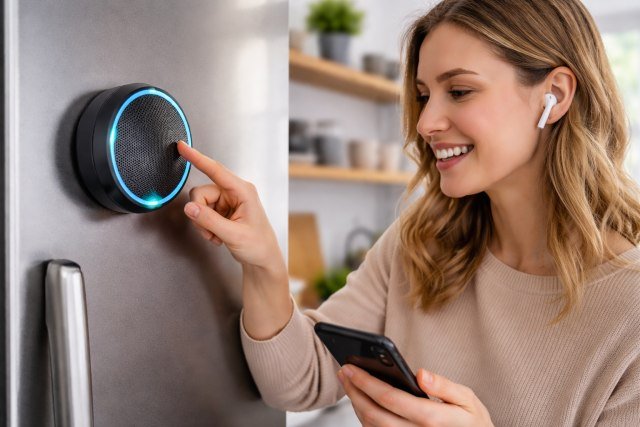
The strongest case for a Magnetic Bluetooth Speaker comes from daily life. Think about the kitchen, where counter space is always limited. A magnet-mounted speaker can stay attached to the refrigerator and keep audio accessible without clutter. Think about a workshop, where attaching a speaker to a tool chest keeps it away from sawdust and spills. Think about a home gym, where mounting it on a rack creates a better listening angle than leaving it on the floor.
Travel and outdoor use can also benefit. Campers, van users, and road trippers often deal with tight spaces and changing setups. A speaker that can attach to metal components inside a vehicle or on outdoor equipment adds flexibility that standard portable speakers lack.
This is why the category has staying power. The Magnetic Bluetooth Speaker is not trying to outperform every premium speaker on pure audio. It is combining sound, portability, and mounting convenience in a way that solves real user needs.
How to Judge Performance Before You Buy
A smart buyer should read beyond the headline specs. Product pages tend to emphasize wattage, battery hours, and dramatic phrases like deep bass or room-filling sound. Those terms are not meaningless, but they rarely tell the full story.
Instead, start with the core questions. Is the magnetic hold actually strong? Does the speaker use a modern charging port? Is there an IP rating from a recognized standard? Does the speaker sound clear at everyday listening volumes? Is Bluetooth pairing smooth and stable?
Then think about your environment. If you want a Magnetic Bluetooth Speaker for light indoor use, you may not need maximum ruggedness. If you want one for worksites or outdoor activities, build quality and environmental protection should move to the top of your list.
This kind of buying mindset leads to better outcomes than chasing the loudest marketing promises.
Common Mistakes Buyers Make
One common mistake is focusing only on size. A very small Magnetic Bluetooth Speaker may be convenient, but it can struggle with fullness and volume if the drivers are too limited. Another mistake is assuming every rugged-looking speaker is truly water resistant. Without a clear IP rating, appearance alone does not prove much.
Buyers also sometimes ignore charging standards. A speaker that still uses an outdated connector may become annoying over time, especially when most of your other devices already rely on USB-C. And finally, many people overlook magnet quality until after purchase. For this category, that should never be an afterthought.
Are Magnetic Bluetooth Speakers Worth It?
For the right buyer, yes. A Magnetic Bluetooth Speaker is worth it when placement flexibility matters as much as audio itself. It is especially useful for workspaces, kitchens, garages, fitness areas, travel setups, and other places where a normal speaker does not have an ideal resting spot.
The value becomes even clearer when the speaker combines strong magnetic mounting with balanced sound, reliable Bluetooth, practical battery life, modern charging, and a verified durability rating. That combination creates a product that is genuinely more versatile than a standard compact speaker.
If, however, your only goal is maximum hi-fi performance for indoor listening, a traditional speaker may offer better pure audio for the money. The real appeal of the Magnetic Bluetooth Speaker is that it brings convenience and context-aware design into the listening experience.
Final Thoughts on Magnetic Bluetooth Speaker Features and Performance
Choosing the best Magnetic Bluetooth Speaker comes down to understanding how the product will be used in real life. Sound quality matters, but so do magnetic grip, battery reliability, durability, charging convenience, and stable Bluetooth connectivity. When those elements work together, the speaker feels less like a novelty and more like an everyday tool.
The best approach is to buy with purpose. Match the speaker to your environment, your listening habits, and your expectations. If you do that, a Magnetic Bluetooth Speaker can deliver far more value than its compact size might suggest. With improving wireless audio technologies, recognized durability standards, and the continued spread of USB-C charging, this category is well positioned to remain useful for both casual listeners and practical users alike.
FAQ: Magnetic Bluetooth Speaker
What is the main advantage of a Magnetic Bluetooth Speaker?
The main advantage is flexible placement. You can attach it to metal surfaces for hands-free listening, better positioning, and less clutter.
Is a Magnetic Bluetooth Speaker good for outdoor use?
It can be, especially if it has a suitable IP rating for dust and water resistance. Always check the actual rating before assuming it is rugged enough.
Does magnetic mounting improve sound quality?
Not directly, but it can improve practical listening by letting you place the speaker in a better location, which often makes audio feel clearer and more immediate.
Should I choose USB-C charging?
In most cases, yes. USB-C is more convenient, more modern, and better aligned with today’s charging ecosystem.
Is newer Bluetooth important in a speaker?
Yes, because newer Bluetooth audio developments can improve efficiency, flexibility, and overall wireless audio handling.