


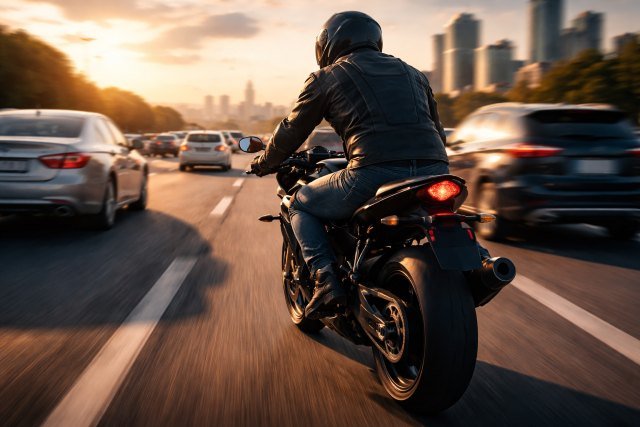
Motorcycle Safety Tips matter every time you ride, whether you are navigating fast-moving highways or weaving through busy city streets. Motorcycling offers freedom, efficiency, and excitement, but it also demands more awareness, skill, and preparation than driving a car. According to the CDC, about 6,000 motorcyclists died on U.S. roads in 2022, and more than 218,000 were treated in emergency departments for crash injuries. The same CDC guidance also notes that helmets reduce the risk of death and head injury, making basic safety habits one of the most important investments any rider can make.
- Why Motorcycle Safety Tips Matter More Than Ever
- Wear the Right Gear Every Ride
- Highway Motorcycle Safety Tips for Higher-Speed Riding
- City Street Motorcycle Safety Tips for Urban Traffic
- Speed Control, Braking, and Cornering
- Never Ride Impaired or Overconfident
- Training, Practice, and Motorcycle Readiness
- Weather, Road Conditions, and Defensive Riding
- Common Questions About Motorcycle Safety Tips
- What is the most important motorcycle safety tip?
- Are highways more dangerous than city streets for motorcyclists?
- Do experienced riders still need training?
- Does visible gear really help?
- Conclusion
The best Motorcycle Safety Tips are not just about buying gear or memorizing traffic rules. They are about building a full riding system that combines the right helmet, visible clothing, smart lane positioning, speed control, smooth braking, and constant hazard awareness. Riders who stay safe usually do not rely on luck. They rely on habits that give them more time, more space, and more control. That mindset is what separates a pleasant ride from a dangerous one.
If you want one simple definition for a featured snippet, here it is: motorcycle safety means reducing risk through protective gear, rider training, defensive riding, speed management, and constant awareness of traffic, road, and weather conditions. That definition applies whether you are commuting downtown, taking a weekend trip, or riding long-distance on open roads.
Why Motorcycle Safety Tips Matter More Than Ever
Motorcycles are smaller, lighter, and less visible than passenger vehicles, which makes riders more exposed in a crash. The CDC reports that motorcycle crashes accounted for 13% of all motor vehicle crash deaths in 2022, despite motorcycles representing a much smaller share of vehicles on the road. That gap explains why riders must take a proactive approach instead of assuming that other drivers will always see them or react correctly.
Another reason Motorcycle Safety Tips are so important is that many serious crashes involve preventable factors. NHTSA emphasizes helmet use, responsible riding, alcohol avoidance, and rider education as key parts of motorcycle safety. IIHS has also reported that weaker helmet laws have contributed to tens of thousands of rider deaths over time, showing that proven safety measures save lives in real-world conditions, not just in theory.
For everyday riders, this means safety is not one big decision. It is a series of small decisions made before and during every ride. Check the bike. Wear the right gear. Leave enough space. Slow down before curves. Assume the other driver may not notice you. These choices add up quickly.
Wear the Right Gear Every Ride
One of the most effective Motorcycle Safety Tips is also the most obvious: wear a properly certified helmet every time. NHTSA advises riders to use a helmet that meets U.S. DOT FMVSS 218 standards. CDC data shows helmets are 37% effective in preventing rider deaths, 41% effective for passengers, and reduce the risk of head injury by 69%. That is not a minor benefit. It is one of the strongest safety advantages available to any rider.
Helmet quality matters, but fit matters too. A helmet should sit snugly, stay secure, and not shift excessively. A loose helmet can reduce protection, create distractions, and become dangerous in a crash. Eye protection also matters because wind, dust, insects, and debris can affect your vision in a split second. NHTSA and MSF both stress certified helmets and proper eye protection as core parts of safe riding.
Beyond the helmet, smart riders wear abrasion-resistant jackets, gloves, long pants, over-the-ankle footwear, and high-visibility elements. Bright or reflective gear improves your chances of being noticed, especially at night, in poor weather, or in crowded urban traffic. A rider in dark casual clothes may feel comfortable, but comfort is not the same as protection.
Highway Motorcycle Safety Tips for Higher-Speed Riding
Highways create a different kind of risk than city streets. Speeds are higher, stopping distances are longer, and mistakes happen faster. One of the most valuable Motorcycle Safety Tips for highway riding is to increase your following distance. MSF emphasizes creating time and space as a core safety margin, because extra space gives you more time to identify hazards, brake smoothly, or change position if traffic suddenly slows.
Lane positioning also becomes more important at highway speeds. Riding where you are most visible in mirrors, rather than hidden in blind spots, helps reduce the risk of being cut off by another vehicle. The Motorcycle Safety Foundation highlights visibility as a central principle of safe riding, and NHTSA similarly urges riders to stay alert around traffic and road awareness issues.
Another highway tip is to stay smooth with throttle, braking, and steering inputs. Sudden reactions at high speed can unsettle the bike. Riders who scan far ahead, read traffic patterns early, and avoid aggressive moves usually have more control when conditions change. This is especially important near ramps, merging zones, and large trucks, where wind buffeting and unpredictable lane changes can create serious hazards.
Fatigue also matters more on longer rides than many people realize. A rider who is mentally tired may still feel physically fine, yet reaction time, judgment, and hazard detection can all suffer. On highways, where conditions evolve quickly, that mental fatigue can become costly.
City Street Motorcycle Safety Tips for Urban Traffic
City riding usually involves lower speeds than highways, but it often includes more frequent hazards. Intersections, parked cars, pedestrians, delivery vehicles, potholes, lane changes, and distracted drivers all compete for your attention. One of the smartest Motorcycle Safety Tips for city streets is to ride as if every intersection contains a possible threat. Many urban crashes happen because another road user turns left across a rider’s path or pulls out without noticing the motorcycle.
Urban riders should also watch for doors opening from parked cars, sudden braking from traffic ahead, and slippery surfaces such as paint lines, oil patches, metal covers, or wet leaves. These hazards may seem minor in a car, but on a motorcycle they can affect traction quickly. Smooth braking and lower speeds give you more room to respond.
Visibility is just as important in the city as it is on the highway. Bright gear, headlights, and smart lane placement all improve your chances of being seen. A useful real-world habit is to avoid lingering beside vehicles, especially SUVs, vans, and buses. If you are beside them, you are easier to miss.
Speed Control, Braking, and Cornering
Among all Motorcycle Safety Tips, speed management may be the one that influences every other decision. Higher speed reduces your available time, increases stopping distance, and raises crash severity. It can also narrow your field of attention. Riding at a pace that matches traffic, road conditions, visibility, and your own skill level is not timid riding. It is skilled riding.
Braking deserves regular practice. Riders should know how their motorcycle behaves under firm braking and how to use both brakes effectively. Modern motorcycles with ABS can provide important safety benefits. IIHS lists ABS among the key motorcycle safety topics it studies, and ABS has been associated with crash reduction benefits in multiple safety discussions. Even with technology, though, practice still matters because panic is a poor instructor.
Cornering safety begins before the curve. Entering too fast is one of the most common rider mistakes. Safer riders reduce speed before the turn, look through the curve, choose a smooth line, and avoid abrupt braking mid-corner unless absolutely necessary. That approach improves traction and stability on both rural roads and city bends.
Never Ride Impaired or Overconfident
Alcohol and motorcycles are a dangerous mix. NHTSA reports that fatally injured motorcycle operators ages 35 to 39 and 40 to 44 had some of the highest percentages of alcohol impairment, and riders with BACs of .08 or higher were less likely to wear helmets than sober operators. Impairment does not only affect obvious drunken riding. Even smaller amounts of alcohol can reduce balance, focus, reaction time, and decision-making.
Overconfidence is another hidden risk. A rider may feel experienced because they have been riding for years, but experience without discipline can lead to shortcuts. Skipping gear on short rides, following cars too closely, speeding through familiar roads, or showing off in traffic are all signs that confidence has replaced judgment. The safest riders tend to stay humble, because they understand that traffic is unpredictable.
Training, Practice, and Motorcycle Readiness
The Motorcycle Safety Foundation encourages riders to keep sharpening their skills, and NHTSA has long supported rider training as part of a comprehensive safety strategy. Training helps riders develop braking technique, cornering control, hazard awareness, and mental strategies that are harder to learn through trial and error alone.
Your motorcycle also needs attention before it earns your trust on the road. Tires, brakes, lights, mirrors, fluid levels, and controls should be checked regularly. A bike in poor condition can turn a manageable situation into an emergency. Tire pressure alone affects stability, grip, and braking performance, especially when carrying extra weight or riding in hot weather.
A practical example is a rider who leaves for work with worn tires and a weak rear brake because the route is “only city streets.” That assumption can fail the moment a car stops suddenly or a wet patch appears at an intersection. Small maintenance issues become large safety issues very quickly on two wheels.
Weather, Road Conditions, and Defensive Riding
Weather changes the meaning of Motorcycle Safety Tips because rain, fog, heat, and wind all affect traction and rider performance. Wet roads reduce grip, and the first minutes of rainfall can be especially slick as oil rises to the surface. Strong winds can push a bike sideways, especially on bridges or when passing trucks. Defensive riding means adjusting speed, following distance, and expectations to the actual conditions rather than the ideal ones.
Road surface awareness matters too. Gravel, potholes, cracked pavement, uneven lane edges, and construction zones can upset the motorcycle if you hit them without preparation. Riders who scan well ahead and keep a relaxed but ready posture are usually better prepared to manage surface surprises.
Defensive riding is not fear-based. It is anticipation-based. It means expecting that another driver may drift, brake suddenly, turn without signaling, or fail to yield. When you ride with that mindset, you give yourself more escape options.
Common Questions About Motorcycle Safety Tips
What is the most important motorcycle safety tip?
The most important tip is to wear a properly certified helmet every ride and combine that with defensive riding habits. Helmets significantly reduce death and head injury risk, while defensive riding reduces the chance of a crash in the first place.
Are highways more dangerous than city streets for motorcyclists?
Both can be dangerous, but in different ways. Highways involve higher speeds and more severe impacts, while city streets have more intersections, traffic conflicts, and surprise hazards. Safe riding requires different adjustments in each setting.
Do experienced riders still need training?
Yes. Skills fade, traffic changes, and bad habits can develop over time. Refresher training and regular practice help riders stay sharp and correct mistakes before they become serious.
Does visible gear really help?
Yes. High-visibility and reflective gear can improve the chances that drivers notice you, especially in low light, bad weather, or heavy traffic. Visibility does not guarantee safety, but it improves your odds.
Conclusion
Motorcycle Safety Tips are most effective when they become routine rather than occasional. Wearing a certified helmet, using protective gear, practicing braking and cornering, staying visible, avoiding alcohol, and riding with a defensive mindset can dramatically reduce your risk on both highways and city streets. Safe riding is not about removing all danger. It is about stacking the odds in your favor every time you start the engine.
The real secret is consistency. Riders who stay safe for years usually do the simple things over and over again. They check their bike. They protect their body. They give themselves time and space. And they never assume that one easy ride means they can ignore the basics. When applied consistently, Motorcycle Safety Tips turn good intentions into safer journeys.