

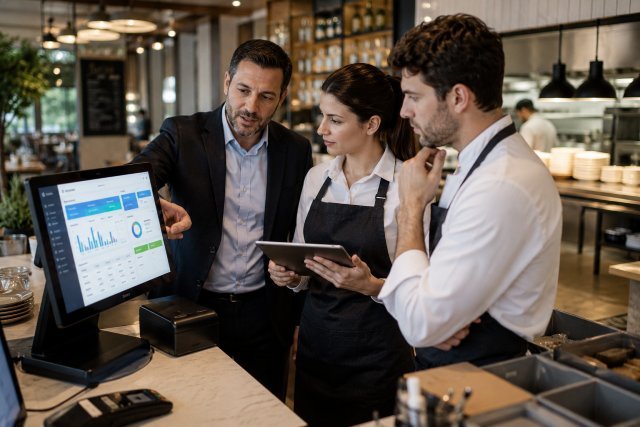
A Jonas Restaurant Software Demo can help restaurant owners, club managers, and hospitality teams understand how modern restaurant management tools work before investing in a system. From point of sale features to inventory tracking, staff workflows, reservations, reporting, and mobile ordering, a demo gives decision-makers a practical look at how the software may fit their daily operations.
- What Is a Jonas Restaurant Software Demo?
- Why Restaurant Management Software Matters Today
- Jonas Restaurant Software Demo: Key Features to Look For
- Point of Sale Functionality
- Mobile POS and Tableside Ordering
- Dining Reservations and Guest Flow
- Inventory and Purchase Order Integration
- Reporting and Management Visibility
- How Jonas Tools Support Restaurant and Club Operations
- Real-World Scenario: How a Demo Helps a Busy Restaurant Manager
- Questions to Ask During a Jonas Restaurant Software Demo
- Benefits of Watching a Jonas Restaurant Software Demo Before Buying
- Potential Limitations to Consider
- Jonas Restaurant Software Demo vs. Generic Restaurant POS Demo
- Actionable Tips Before Booking a Demo
- FAQs About Jonas Restaurant Software Demo
- Is Jonas Restaurant Software only for restaurants?
- Does Jonas offer mobile POS?
- Can Jonas help with inventory management?
- What should I prepare before a Jonas demo?
- Is a Jonas Restaurant Software Demo worth it?
- Conclusion
Restaurant software is no longer just a cash register replacement. Today, it acts as a central hub for orders, payments, stock control, customer service, employee activity, and business insights. Jonas Club Software’s food and beverage tools highlight features such as point of sale, dining operations, event management, inventory, purchase orders, and integrated club management systems.
For restaurants, private clubs, hotels, and food service venues, the real question is not only “What does the software offer?” The better question is: “Can this system make daily work faster, clearer, and easier to manage?”
What Is a Jonas Restaurant Software Demo?
A Jonas Restaurant Software Demo is a guided walkthrough of the software’s restaurant, food and beverage, or hospitality management features. It usually shows how managers and staff can handle orders, track sales, manage reservations, update inventory, review reports, and connect different business areas.
Jonas Club Software promotes its point of sale system as an integrated solution for dining, retail, and event operations. Its POS connects with club management, event management, inventory, and purchase order tools, helping different departments stay aligned.
In simple terms, the demo helps you see whether the software can support the way your business actually works. A small café may care most about fast ordering and simple reporting. A private club may need member billing, dining reservations, event management, and inventory control. A multi-location hospitality business may need more advanced reporting and tighter operational visibility.
That is why watching a demo is important before making a buying decision.
Why Restaurant Management Software Matters Today
Restaurant operations are becoming more digital, data-driven, and connected. Managers are expected to control costs, improve customer experience, reduce order mistakes, monitor staff performance, and react quickly to sales trends.
Modern POS systems are also moving beyond basic transactions. Current restaurant technology discussions highlight the growing role of analytics, inventory visibility, labor tracking, customer insights, and integrated digital ordering.
For many food service businesses, software can improve three major areas: speed, accuracy, and visibility.
Speed matters because slow service can damage customer satisfaction. Accuracy matters because order errors, payment mistakes, and inventory mismatches can hurt profits. Visibility matters because owners cannot fix what they cannot see.
A Jonas Restaurant Software Demo can show how these pieces come together inside one system.
Jonas Restaurant Software Demo: Key Features to Look For
When you attend or review a Jonas Restaurant Software Demo, focus on practical features rather than flashy screens. A good demo should show how the system performs during real restaurant situations.
Point of Sale Functionality
The point of sale system is the heart of restaurant software. It should make it easy for servers, cashiers, bartenders, and managers to place orders, split checks, modify items, process payments, and send orders to the kitchen.
Jonas Club Software describes its POS as customizable, flexible, and integrated with other management areas. This is useful because food service operations often need different workflows for dining rooms, bars, events, poolside service, member dining, and retail areas.
During the demo, look at how fast the order screen works. Ask whether menu items can be updated easily. Check if staff can apply discounts, handle modifiers, transfer tables, split payments, and close checks without confusion.
A POS system should reduce friction, not create more steps.
Mobile POS and Tableside Ordering
Mobile POS is becoming more important in restaurants, clubs, and hospitality venues. Staff can take orders directly at the table or in outdoor service areas without returning to a fixed terminal.
Jonas states that its mobile POS works through the Jonas Club Management App and Jonas Encore App. The company says this reduces the need for wait staff to return to a POS terminal for order placement and settlement, which can reduce ticket times and improve kitchen workflow.
In a demo, mobile POS should be tested from the staff’s point of view. Can a server quickly add items? Can they send orders to the kitchen immediately? Can they settle a bill tableside? Is the interface simple enough for busy shifts?
If the answer is yes, mobile POS may help improve service speed and table turnover.
Dining Reservations and Guest Flow
For restaurants and clubs that rely on reservations, the demo should include booking management. This is especially important for private dining, member restaurants, events, and high-demand meal periods.
Jonas has training content related to Dining Reservations, including creating, changing, deleting, and reporting on reservations.
A strong reservation module should help managers see capacity, avoid overbooking, manage waitlists, and understand dining demand. It should also make it easier for front-of-house staff to coordinate seating with service teams.
Ask how reservations connect with member profiles, customer history, dining preferences, and event bookings. These connections can make the software more valuable than a standalone reservation tool.
Inventory and Purchase Order Integration
Food costs can quietly damage restaurant profitability. A system that connects sales with inventory can help managers understand what is being sold, what is being wasted, and what needs to be reordered.
Jonas Club Software’s food and beverage tools mention integration with inventory and purchase orders. Its POS also connects with inventory and other operational modules.
In the demo, ask how inventory is updated after sales. Can managers track ingredient usage? Can purchase orders be created inside the system? Can reports show cost trends? Can the software help identify over-ordering or stock shortages?
Restaurant software is most useful when it turns daily transactions into better business decisions.
Reporting and Management Visibility
Good reporting is one of the biggest reasons to invest in restaurant management software. Owners and managers need clear data on sales, labor, inventory, menu performance, payment types, and customer behavior.
Jonas Club Software also promotes a Management App for executives and department managers, allowing access to key system features, daily agendas, member profiles, staff chat, and inventory from mobile devices.
During the demo, do not only look at the number of reports available. Look at whether the reports are easy to understand.
A useful report should answer real questions, such as:
- Which menu items are selling best?
- Which items have weak margins?
- Which service periods are busiest?
- Which staff members need more support?
- Where are inventory costs rising?
- Which events or dining areas generate the most revenue?
If the reporting dashboard feels confusing during the demo, it may become even harder during daily operations.
How Jonas Tools Support Restaurant and Club Operations
Jonas software is often associated with private clubs, country clubs, and hospitality operations where food and beverage is one part of a larger business. This makes integration especially important.
For example, a private club may need to connect dining charges to member accounts. A restaurant inside a club may need event menus, banquet service, member reservations, inventory control, and financial reporting. A hospitality venue may need retail, dining, and event operations to work from the same ecosystem.
Jonas Club Software says its POS integrates with Club Management, Event Management, Inventory & Purchase Order, and other areas.
This type of integration can reduce duplicate work. Instead of entering the same information into separate systems, staff can work from connected tools. That can improve accuracy and save time.
Real-World Scenario: How a Demo Helps a Busy Restaurant Manager
Imagine a restaurant manager at a private club preparing for a Friday evening dinner service. The dining room is fully booked, an event is happening in another area, and poolside food orders are also expected.
Without connected software, the team may struggle with separate systems for reservations, orders, event billing, inventory, and reporting. Staff may need to walk back and forth to terminals. Managers may not see real-time sales or kitchen pressure.
With a more integrated platform, the manager can review reservations, monitor active checks, track stock levels, view staff activity, and check sales trends from connected tools. Mobile POS can help servers submit orders faster from different service areas. Inventory data can help the kitchen prepare for demand.
This is exactly the kind of workflow you should ask to see during a Jonas Restaurant Software Demo.
Do not settle for a general sales presentation. Ask the presenter to walk through a real shift from opening to closing.
Questions to Ask During a Jonas Restaurant Software Demo
Before attending the demo, prepare questions based on your restaurant’s actual pain points. This helps you avoid being impressed by features you may never use.
Here are important questions to ask:
- How does the POS handle table service, bar service, events, and retail?
- Can the system support mobile ordering and tableside payments?
- How does inventory update after sales?
- Can the software manage dining reservations?
- What reports are available for sales, labor, inventory, and menu performance?
- Does it integrate with accounting or member billing?
- How difficult is staff training?
- What support is available after implementation?
- Can the system scale with more locations or service areas?
- What is included in the demo, and what requires extra modules?
These questions make the demo more practical and less generic.
Benefits of Watching a Jonas Restaurant Software Demo Before Buying
A software demo gives you a safer way to evaluate a platform before committing money, time, and staff training.
The biggest benefit is clarity. You can see how the system works instead of relying only on feature lists. You can test whether the interface feels intuitive. You can ask questions about your exact workflow. You can compare Jonas with other restaurant management software options.
A demo also helps identify gaps. Maybe the POS is strong, but you need deeper inventory tools. Maybe the reporting is useful, but your team needs simpler mobile access. Maybe the system fits clubs better than standalone quick-service restaurants.
That kind of insight is valuable before signing a contract.
Potential Limitations to Consider
No restaurant software is perfect for every business. Jonas tools may be especially relevant for clubs, hospitality venues, and food and beverage operations that need integrated management features. However, a small independent restaurant may need to compare whether the platform is the right fit for its size, budget, and workflow.
During the demo, pay attention to setup complexity, training needs, pricing structure, hardware requirements, integrations, support response times, and contract terms.
Also ask whether features shown in the demo are included in the base package or require separate modules. This prevents surprises later.
Jonas Restaurant Software Demo vs. Generic Restaurant POS Demo
A generic POS demo usually focuses on order taking, payment processing, and basic reporting. A Jonas Restaurant Software Demo may go further by showing how POS connects with club management, reservations, events, inventory, purchase orders, and manager tools.
That wider ecosystem can be useful if your business has multiple departments or service types.
For example, a club may need one platform for dining, events, member profiles, retail, and billing. A hotel restaurant may need tighter operational coordination. A high-volume restaurant may need mobile ordering and faster kitchen communication.
The best choice depends on your business model.
Actionable Tips Before Booking a Demo
Before scheduling the demo, write down your top five operational problems. These may include slow service, poor inventory control, weak reporting, staff mistakes, disconnected systems, or difficulty managing reservations.
Then ask the demo team to show how Jonas handles those exact issues.
It is also smart to involve the people who will actually use the software. That may include a general manager, front-of-house supervisor, chef, accountant, and one server or cashier. Each person will notice different details.
Finally, compare the demo against at least two other restaurant management software options. This gives you a better sense of usability, pricing, support, and long-term fit.
FAQs About Jonas Restaurant Software Demo
Is Jonas Restaurant Software only for restaurants?
Jonas Club Software is strongly associated with private clubs, country clubs, and hospitality environments, but its food and beverage tools include restaurant-style features such as POS, dining operations, reservations, inventory, and event support. Businesses should request a demo to confirm fit for their exact operation.
Does Jonas offer mobile POS?
Yes. Jonas mentions mobile POS through its Jonas Club Management App and Jonas Encore App. The mobile POS is designed to reduce staff trips back to terminals and help improve order placement and settlement workflows.
Can Jonas help with inventory management?
Jonas food and beverage tools connect POS with inventory and purchase order functions. This can help managers monitor stock, purchasing, and operational costs more clearly.
What should I prepare before a Jonas demo?
Prepare your current workflow, pain points, number of users, service areas, reporting needs, payment requirements, reservation process, and inventory challenges. The more specific your questions are, the more useful the demo becomes.
Is a Jonas Restaurant Software Demo worth it?
Yes, if you manage a restaurant, club, or hospitality food service operation and want to understand whether Jonas can support your POS, reporting, inventory, mobile service, and operational management needs.
Conclusion
A Jonas Restaurant Software Demo is a valuable step for restaurant owners, club managers, and hospitality teams that want a clearer view of modern restaurant management tools. The demo can show how Jonas handles POS, mobile ordering, reservations, inventory, purchase orders, reporting, and integrated food and beverage workflows.
The most important thing is to evaluate the software against your real daily operations. Do not only ask what the system can do. Ask how it solves your specific problems.
If your business needs connected restaurant tools, stronger reporting, mobile service options, and better operational visibility, a Jonas Restaurant Software Demo can help you decide whether the platform is the right long-term fit.