


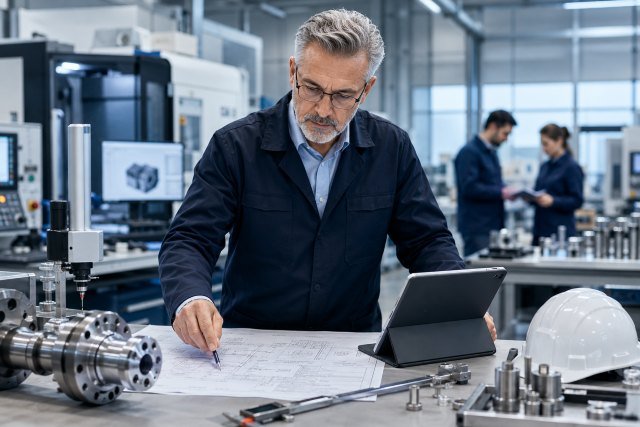
A Chief Technical Examiner plays a vital role in technical scrutiny, public procurement review, contract examination, and quality control. In simple terms, this professional checks whether technical projects, engineering works, purchases, and contracts are being handled properly, fairly, and according to approved standards.
- What Is a Chief Technical Examiner?
- Why the Chief Technical Examiner Role Matters
- Chief Technical Examiner Duties and Responsibilities
- Technical Audit and Examination Work
- Role in Public Procurement and Contracts
- Skills Required for a Chief Technical Examiner
- Qualifications and Experience Needed
- Chief Technical Examiner vs Technical Examiner
- Real-World Example of Chief Technical Examiner Work
- Importance in Anti-Corruption and Vigilance
- Career Tips for Becoming a Chief Technical Examiner
- Common Challenges in the Role
- How Organisations Benefit from a Chief Technical Examiner
- FAQs About Chief Technical Examiner
- What does a Chief Technical Examiner do?
- Is a Chief Technical Examiner an engineer?
- Why is the Chief Technical Examiner important?
- What skills are needed for this role?
- Does a Chief Technical Examiner investigate corruption?
- Conclusion
The position is especially important in government, infrastructure, public sector, and large institutional environments where technical decisions involve public money, safety, compliance, and accountability. A Chief Technical Examiner does not simply look at paperwork. The role demands engineering knowledge, financial awareness, ethical judgment, and the ability to detect irregularities before they become costly failures.
In India, the Chief Technical Examiners’ Organisation functions as the technical wing of the Central Vigilance Commission. The Central Vigilance Commission explains that the organisation is headed by two Chief Technical Examiners, with one generally responsible for civil and horticulture procurement matters and the other for areas such as supply contracts, electrical, mechanical, IT, consultancy, service, and transport contracts.
What Is a Chief Technical Examiner?
A Chief Technical Examiner is a senior technical authority who examines engineering works, procurement contracts, technical procedures, and project execution from a vigilance and quality perspective. The job usually requires deep experience in engineering, contract management, procurement rules, technical auditing, and public works administration.
The purpose of the role is not limited to finding faults after a project is complete. A good Chief Technical Examiner helps improve systems, reduce waste, identify weak procedures, and promote transparent decision-making.
In public-sector settings, this role becomes even more important because large projects often involve major budgets, multiple contractors, strict specifications, and public interest. When procurement or technical execution is poorly handled, the result can be low-quality work, inflated costs, delays, safety risks, or corruption.
The Central Vigilance Commission states that the Chief Technical Examiners’ Organisation conducts intensive examination of different types of works and procurement contracts. This makes the role highly relevant for both technical quality and vigilance administration.
Why the Chief Technical Examiner Role Matters
The Chief Technical Examiner matters because technical projects are rarely simple. A road, bridge, building, power system, IT procurement, or mechanical installation may look successful from the outside, but the real quality lies in specifications, materials, testing, measurements, billing, and compliance.
A senior technical examiner helps answer one important question: was the work done correctly, honestly, and in line with approved standards?
This is where the job becomes more than a technical position. It becomes a public accountability role. When public money is used for projects, people expect value, safety, and fairness. A Chief Technical Examiner supports that expectation by reviewing whether systems are being followed and whether technical decisions can stand up to scrutiny.
The role also supports preventive vigilance. Instead of waiting for corruption, defects, or disputes to appear later, technical examination can reveal risk areas early. This helps departments improve procedures and avoid repeated mistakes.
Chief Technical Examiner Duties and Responsibilities
The duties of a Chief Technical Examiner vary depending on the organisation, but the core responsibility is technical examination. This may include reviewing contracts, inspecting works, checking procurement processes, studying quality records, and advising on technical irregularities.
In the CVC framework, the Chief Technical Examiners’ Organisation is involved in intensive examination of public procurement and contracts. Official CVC material notes that the organisation is supported by Technical Examiners, Assistant Technical Examiners, and Junior Technical Examiners.
A Chief Technical Examiner may review whether a tender was prepared correctly, whether specifications were fair, whether the selected contractor met technical requirements, and whether the executed work matches approved drawings and standards.
The examiner may also check if measurements and bills are accurate. In engineering works, small measurement errors can lead to large financial differences. For example, inflated quantities in civil work, unnecessary variations, or poor-quality materials can cause both financial loss and long-term safety issues.
Another important duty is identifying procedural gaps. Sometimes the problem is not one dishonest act but a weak system. A Chief Technical Examiner can recommend better documentation, stronger inspection methods, clearer contract clauses, and improved monitoring.
Technical Audit and Examination Work
Technical audit is one of the most important parts of the Chief Technical Examiner’s job. Unlike a general financial audit, a technical audit looks closely at engineering and procurement decisions.
The examiner may study project estimates, tender documents, comparative statements, technical bids, quality test reports, site inspection notes, completion certificates, and payment records. The goal is to see whether the process was technically sound and whether the organisation received proper value.
For example, in a construction project, the examiner may check whether the approved material grade was actually used. In an electrical project, the examiner may review whether equipment matches the specifications. In an IT procurement case, the examiner may examine whether technical requirements were realistic, fair, and not written to favor one vendor.
This work requires practical knowledge. A Chief Technical Examiner must understand how projects are executed in the real world, not just how rules appear on paper.
Role in Public Procurement and Contracts
Public procurement is one of the most sensitive areas for technical examination. It involves buying goods, services, works, equipment, and technology using organisational or public funds.
The CVC’s description of the Chief Technical Examiners’ Organisation shows that the role covers a wide range of procurement categories, including civil, horticulture, supply, electrical, mechanical, IT, consultancy, service, and transport contracts.
This wide scope shows why the Chief Technical Examiner must understand both technical and contractual issues. A technically weak tender can create unfair competition. A vague specification can lead to disputes. A poorly monitored contract can result in delays, poor quality, or excess payment.
The examiner’s role is to ensure that procurement decisions are transparent, technically justified, and compliant with rules. This protects the organisation and also gives honest vendors a fair chance.
Skills Required for a Chief Technical Examiner
A Chief Technical Examiner needs strong engineering expertise first. Most people in this role come from senior engineering backgrounds because the work involves complex technical judgment.
However, technical knowledge alone is not enough. The role also requires analytical thinking, contract interpretation, financial awareness, documentation skills, and professional independence.
Communication is another important skill. A Chief Technical Examiner must be able to explain technical findings clearly to non-technical decision-makers. A report should not be confusing or filled with unnecessary jargon. It should show what was examined, what was found, why it matters, and what action may be needed.
Ethical judgment is equally important. The examiner may deal with sensitive matters involving contractors, departments, project officers, or financial decisions. The role requires fairness, confidentiality, and the courage to report facts objectively.
Qualifications and Experience Needed
The exact qualifications depend on the organisation, but a Chief Technical Examiner is generally expected to be a highly experienced engineer or technical expert. In government-related technical vigilance roles, senior engineering experience is usually essential.
The position often requires knowledge of public works procedures, procurement rules, contract management, quality assurance, project execution, and technical inspection. Experience in civil, mechanical, electrical, IT, or procurement-related domains can be useful depending on the area of responsibility.
In the CVC structure, official material describes Chief Technical Examiners as senior technical heads supported by examination staff. This reflects the seniority and specialist nature of the role.
Professionals who want to move toward such roles should build a strong record in project management, technical review, quality control, contract administration, and compliance.
Chief Technical Examiner vs Technical Examiner
A Technical Examiner usually performs examination, inspection, and analysis under the guidance of senior officers. A Chief Technical Examiner leads the function, reviews complex matters, guides the examination team, and advises higher authorities.
The difference is not only about rank. It is also about responsibility. A Chief Technical Examiner must understand the larger system, identify patterns, and recommend improvements. While a Technical Examiner may focus on a specific project detail, the Chief Technical Examiner often looks at both the specific case and the wider governance issue.
For example, if several projects show similar billing irregularities, the Chief Technical Examiner may recommend changes in measurement procedures or contract monitoring methods. This makes the role strategic as well as technical.
Real-World Example of Chief Technical Examiner Work
Imagine a government department awards a contract for a public building. The project is completed, but complaints arise about poor construction quality and high final costs.
A Chief Technical Examiner may review the original estimate, tender conditions, technical specifications, contractor selection process, site records, quality test results, measurement books, and final bills.
During examination, the officer may find that the tender specification allowed inferior material, inspection records were incomplete, and some payments were made without proper verification. The report may then recommend recovery of excess payment, disciplinary review, improved inspection procedures, and stricter quality checks in future projects.
This example shows why the job matters. The Chief Technical Examiner does not only identify what went wrong. The role also helps prevent the same mistake from happening again.
Importance in Anti-Corruption and Vigilance
Technical corruption is often difficult to detect because it can hide behind complex drawings, specifications, measurements, and contract clauses. A non-technical officer may not easily understand whether a project cost is reasonable or whether a technical decision was manipulated.
This is where the Chief Technical Examiner becomes essential. The role brings technical expertise into vigilance work. The examiner can detect inflated estimates, restrictive tender conditions, unnecessary deviations, poor-quality work, irregular payments, and unjustified contract variations.
The Central Vigilance Commission was created to address vigilance and corruption-related issues in government systems, and its technical examination wing supports that mission in technical and procurement matters.
By combining engineering knowledge with vigilance review, a Chief Technical Examiner strengthens institutional integrity.
Career Tips for Becoming a Chief Technical Examiner
Anyone aiming for a Chief Technical Examiner-type role should focus on building both technical depth and administrative maturity. Strong field experience is valuable because technical examination often requires practical understanding of how projects are planned and executed.
Professionals should become comfortable with contract documents, tender evaluation, specifications, quality testing, measurement systems, and procurement guidelines. They should also learn how to write clear technical reports.
Another important tip is to develop independence of judgment. Technical examiners must avoid pressure from contractors, project teams, or internal stakeholders. Their credibility depends on objectivity.
Continuous learning is also necessary. Procurement systems now include IT contracts, digital services, consultancy models, hybrid infrastructure projects, and complex service agreements. A modern Chief Technical Examiner must keep updating knowledge beyond traditional engineering works.
Common Challenges in the Role
The role can be demanding because technical examination often happens in sensitive situations. The examiner may review decisions already approved by senior officials or projects involving large financial stakes.
Another challenge is incomplete documentation. Many problems become harder to assess when records are missing, poorly maintained, or inconsistent. A skilled examiner must know how to cross-check information through drawings, bills, site records, test reports, and contract clauses.
Time pressure is also common. Large projects generate huge amounts of data, yet examination reports must be accurate and useful. This requires discipline, prioritisation, and experience.
The biggest challenge, however, is maintaining fairness. A Chief Technical Examiner must avoid assuming wrongdoing without evidence. The role requires balanced judgment, not fault-finding for its own sake.
How Organisations Benefit from a Chief Technical Examiner
Organisations benefit from a Chief Technical Examiner because the role improves technical discipline. When departments know that projects and procurement decisions may be examined, they are more likely to maintain proper records, follow specifications, and avoid shortcuts.
The role also improves financial control. Technical examination can identify waste, overpayment, unnecessary variations, and poor contract planning. Over time, this can save money and improve project outcomes.
A Chief Technical Examiner also supports better governance. Findings from technical audits can lead to improved manuals, stronger procurement rules, better training, and more accountable project management.
For public organisations, the benefit is even larger. Better technical scrutiny means better use of public funds, safer infrastructure, and stronger trust.
FAQs About Chief Technical Examiner
What does a Chief Technical Examiner do?
A Chief Technical Examiner examines technical works, procurement contracts, project records, quality standards, and execution processes. The goal is to ensure that technical decisions are correct, fair, economical, and compliant with approved procedures.
Is a Chief Technical Examiner an engineer?
In most cases, yes. A Chief Technical Examiner is usually a senior engineering professional with strong experience in project execution, public works, procurement, contracts, and technical audits.
Why is the Chief Technical Examiner important?
The role is important because it helps protect organisations from poor-quality work, inflated costs, irregular procurement, and technical mismanagement. In public-sector settings, it also supports transparency and accountability.
What skills are needed for this role?
The role requires engineering expertise, contract knowledge, analytical thinking, report writing, financial awareness, ethical judgment, and the ability to review complex technical documents objectively.
Does a Chief Technical Examiner investigate corruption?
A Chief Technical Examiner may support vigilance work by examining technical irregularities and procurement issues. The role focuses on technical scrutiny, evidence-based findings, and expert advice in matters involving works and contracts.
Conclusion
A Chief Technical Examiner is far more than a senior technical officer. The role combines engineering knowledge, audit discipline, procurement understanding, and public accountability. From reviewing contracts to examining project quality, the Chief Technical Examiner helps organisations make better technical decisions and avoid costly mistakes.
In sectors where infrastructure, procurement, and public funds are involved, this job matters deeply. It protects quality, improves transparency, strengthens vigilance, and supports better governance.
For professionals, becoming a Chief Technical Examiner requires years of technical experience, strong ethical standards, and the ability to judge complex matters fairly. For organisations, having such a role means stronger control, better project outcomes, and greater trust in technical decision-making.