

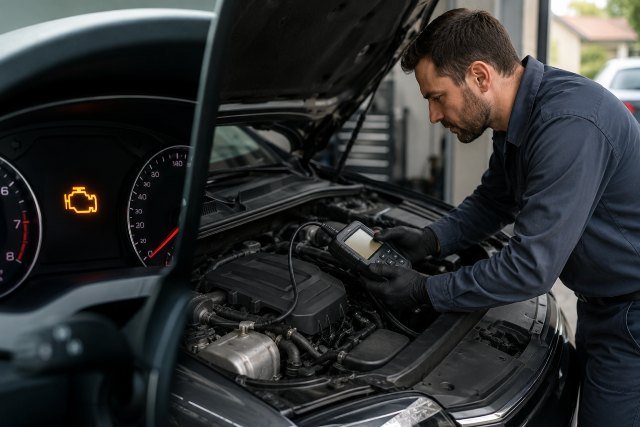
When the Check Emission System warning appears on your dashboard, it usually means your vehicle has detected a problem with the system that controls exhaust gases, fuel vapors, and engine emissions. In simple words, your car is telling you that something is not working properly in the fuel, exhaust, ignition, or emissions control system.
- What Does Check Emission System Mean?
- Is It Safe to Drive With Check Emission System On?
- Common Causes of Check Emission System Warning
- 1. Loose or Damaged Gas Cap
- 2. Faulty Oxygen Sensor
- 3. Catalytic Converter Problems
- 4. EVAP System Leak
- 5. Bad Spark Plugs or Ignition Coils
- 6. Dirty or Faulty Mass Air Flow Sensor
- 7. Exhaust Gas Recirculation System Issue
- Quick Diagnosis: What You Should Do First
- Check Emission System Codes You May See
- How to Fix Check Emission System Fast
- Tighten or Replace the Gas Cap
- Replace a Faulty Oxygen Sensor
- Repair EVAP Leaks
- Fix Misfires Immediately
- Clean or Replace the MAF Sensor
- Check for Exhaust Leaks
- How Much Does It Cost to Fix Check Emission System?
- Will Check Emission System Make You Fail Inspection?
- Real-World Example: The “Simple” Warning That Wasn’t
- Can You Reset the Check Emission System Light?
- When Should You See a Mechanic?
- How to Prevent Future Emission System Problems
- FAQs About Check Emission System
- What does Check Emission System mean?
- Can a bad gas cap cause Check Emission System?
- Is Check Emission System the same as check engine light?
- How long can I drive with Check Emission System on?
- Why did my Check Emission System light come back after reset?
- Will Check Emission System affect fuel economy?
- Conclusion
Sometimes the fix is as simple as tightening the gas cap. Other times, it may involve an oxygen sensor, catalytic converter, EVAP system leak, spark plug issue, or engine control problem. The important thing is not to ignore it for too long.
Modern vehicles use onboard diagnostics, commonly called OBD, to monitor emission-related parts and alert the driver when something is wrong. The EPA explains that OBD systems are used in emissions inspection programs to identify vehicles that may need repairs before they create higher emissions.
What Does Check Emission System Mean?
The Check Emission System message means your vehicle’s computer has detected a fault that may affect emissions, fuel efficiency, or engine performance.
Your car constantly checks parts such as the oxygen sensors, catalytic converter, fuel system, EVAP system, exhaust gas recirculation system, and engine sensors. When one of these parts gives readings outside the expected range, the vehicle stores a diagnostic trouble code and may turn on the warning light.
This warning is closely related to the check engine light. On some vehicles, especially Honda, Acura, and certain other brands, the dashboard may show “Check Emission System” instead of a standard check engine warning.
The EPA notes that major emission control components can include the catalytic converter, the electronic emissions control unit, and the onboard emissions diagnostic device. Some of these components may be covered under federal emissions warranties for specific time and mileage limits.
Is It Safe to Drive With Check Emission System On?
In many cases, you can drive a short distance if the car feels normal, the warning light is steady, and there are no major symptoms. However, you should still diagnose the issue as soon as possible.
If the light is flashing, the engine is shaking, the car smells like fuel, the exhaust smells like rotten eggs, or the vehicle loses power, stop driving and get help. A flashing warning can indicate a serious misfire, which may damage the catalytic converter.
A steady warning is usually less urgent than a flashing one, but it still means the car has detected a problem. Ignoring it can lead to poor fuel economy, failed emissions testing, and more expensive repairs.
Common Causes of Check Emission System Warning
The exact cause depends on your vehicle, but most emission system warnings come from a few common problems.
1. Loose or Damaged Gas Cap
A loose gas cap is one of the simplest reasons for the Check Emission System warning. The fuel tank must stay sealed so fuel vapors do not escape into the air.
If the cap is loose, cracked, missing, or not sealing properly, the EVAP system may detect a leak. This can trigger the warning light.
Fast fix: Turn off the engine, remove the gas cap, inspect it, and tighten it until it clicks. If the rubber seal is cracked or worn, replace the cap. After this, the warning may take a few driving cycles to disappear.
2. Faulty Oxygen Sensor
Oxygen sensors measure how much oxygen is in the exhaust. Your vehicle uses this information to adjust the air-fuel mixture.
If an oxygen sensor fails, your engine may burn too much fuel or run inefficiently. This can increase emissions and reduce fuel economy.
A bad oxygen sensor may also cause rough idling, sluggish acceleration, or poor gas mileage. Since oxygen sensors help protect the catalytic converter, delaying repair can create bigger problems.
3. Catalytic Converter Problems
The catalytic converter helps reduce harmful exhaust gases before they leave the tailpipe. If it becomes clogged, overheated, or damaged, the emission system warning may appear.
Common signs include poor acceleration, a sulfur or rotten egg smell, reduced fuel economy, and failed emissions testing.
Catalytic converter repairs can be expensive, so it is smart to diagnose smaller problems early. Misfires, bad spark plugs, oil burning, or faulty sensors can damage the converter over time.
4. EVAP System Leak
The EVAP system captures fuel vapors and prevents them from escaping into the atmosphere. A leak in this system can trigger the Check Emission System warning.
Common EVAP-related issues include a loose gas cap, cracked vacuum hose, faulty purge valve, bad vent valve, or leaking charcoal canister.
The car may drive normally even with an EVAP leak, but it can still fail an emissions test. EVAP problems are usually diagnosed with a scan tool and sometimes a smoke test.
5. Bad Spark Plugs or Ignition Coils
A weak spark plug or faulty ignition coil can cause misfires. Misfires allow unburned fuel to enter the exhaust system, which increases emissions and can overheat the catalytic converter.
Symptoms may include engine shaking, hesitation, poor acceleration, rough idle, and higher fuel use.
This is one of the causes you should not ignore. A small ignition issue can become a costly exhaust system repair if left untreated.
6. Dirty or Faulty Mass Air Flow Sensor
The mass air flow sensor measures the amount of air entering the engine. If it gets dirty or fails, the engine may receive the wrong fuel mixture.
A faulty MAF sensor can cause rough idle, stalling, poor acceleration, and bad fuel economy. Sometimes cleaning the sensor helps, but in other cases replacement is needed.
7. Exhaust Gas Recirculation System Issue
The EGR system helps reduce nitrogen oxide emissions by recirculating a small amount of exhaust gas back into the engine.
If the EGR valve sticks open or closed, the car may run rough, knock, stall, or trigger an emission warning. Carbon buildup is a common reason EGR systems fail.
Quick Diagnosis: What You Should Do First
Before spending money on repairs, follow a simple step-by-step process.
First, check the gas cap. Make sure it is tight and not damaged.
Second, notice how the car feels. If it runs smoothly, the issue may be minor. If it shakes, smells strange, loses power, or makes unusual noises, avoid driving too much.
Third, scan the vehicle for diagnostic trouble codes. Most auto parts stores, mechanics, and OBD-II scanners can read these codes. The code will not always tell you the exact failed part, but it gives a strong starting point.
Fourth, do not clear the code without understanding it. Clearing the light may hide the symptom temporarily, but the issue can return. It may also reset emissions readiness monitors, which can cause problems before an inspection.
OBD systems monitor emission-related subsystems using continuous and periodic checks. Some readiness monitors need normal driving cycles before they show as complete again.
Check Emission System Codes You May See
Here are common OBD-II codes connected to emission system problems:
| Code | Possible Meaning | Common Cause |
|---|---|---|
| P0420 | Catalyst system efficiency below threshold | Bad catalytic converter, O2 sensor, exhaust leak |
| P0440 | EVAP system fault | Gas cap, EVAP leak, purge valve |
| P0442 | Small EVAP leak | Loose gas cap, cracked hose |
| P0455 | Large EVAP leak | Missing gas cap, large hose leak |
| P0171 | System too lean | Vacuum leak, MAF sensor, fuel issue |
| P0300 | Random/multiple misfire | Spark plugs, coils, fuel, compression |
| P0135 | O2 sensor heater circuit issue | Bad oxygen sensor or wiring |
These codes should be treated as clues, not final answers. For example, a P0420 code may point to the catalytic converter, but the real cause could be an exhaust leak or faulty oxygen sensor.
How to Fix Check Emission System Fast
The fastest fix depends on the cause. Start with the cheapest and simplest checks before replacing expensive parts.
Tighten or Replace the Gas Cap
If the warning came on soon after refueling, the gas cap should be your first suspect.
Tighten it properly and drive for a few days. If the light stays on, scan the codes. If the gas cap is old or the seal looks damaged, replacement is usually inexpensive.
Replace a Faulty Oxygen Sensor
If the scan shows an oxygen sensor code, confirm whether the sensor itself is bad or if another issue is affecting the reading.
Replacing a bad O2 sensor can improve fuel economy and help prevent catalytic converter damage.
Repair EVAP Leaks
EVAP leaks often need a smoke test to find the exact problem. Common repairs include replacing hoses, purge valves, vent valves, or the charcoal canister.
A mechanic can usually test the purge valve and EVAP system quickly with the right equipment.
Fix Misfires Immediately
If you see misfire codes such as P0300, P0301, P0302, or similar, repair the ignition or fuel issue quickly.
Spark plugs and ignition coils are common causes. Driving with a misfire can send raw fuel into the catalytic converter and damage it.
Clean or Replace the MAF Sensor
A dirty MAF sensor can sometimes be cleaned with proper mass air flow sensor cleaner. Do not use regular brake cleaner or harsh chemicals unless the product is safe for sensors.
If cleaning does not help, replacement may be needed.
Check for Exhaust Leaks
An exhaust leak before the oxygen sensor can confuse the system and trigger emission-related codes. A mechanic can inspect the exhaust manifold, gaskets, pipes, and sensor area for leaks.
How Much Does It Cost to Fix Check Emission System?
Repair costs vary widely based on the vehicle and the actual fault.
A gas cap may cost very little. Oxygen sensors and EVAP valves are usually moderate repairs. Catalytic converters are often among the most expensive emission system repairs.
Here is a general cost idea:
| Repair | Typical Cost Range |
|---|---|
| Gas cap replacement | Low cost |
| OBD scan | Free to moderate cost |
| Oxygen sensor replacement | Moderate cost |
| EVAP purge valve | Moderate cost |
| Spark plugs or ignition coil | Moderate cost |
| Catalytic converter | High cost |
| Exhaust leak repair | Low to high depending on location |
Before approving a costly repair, ask the mechanic to explain the diagnostic evidence. A code alone is not always enough to justify replacing an expensive part.
Will Check Emission System Make You Fail Inspection?
Yes, it can. If the warning light is on, many emissions inspection programs may fail the vehicle because the system is reporting an unresolved fault.
OBD-based emissions testing checks whether the vehicle’s computer has stored faults and whether readiness monitors are complete. The EPA has long supported OBD checks as part of inspection and maintenance programs because they help identify vehicles needing emission-related repairs.
If you recently cleared codes, your vehicle may also fail because readiness monitors have not completed. This is why it is better to fix the problem rather than simply erase the warning.
Real-World Example: The “Simple” Warning That Wasn’t
Imagine a driver notices the Check Emission System message right after a fuel stop. The car drives fine, so they ignore it. A week later, fuel economy drops and the engine starts idling rough.
At first, the issue looked like a gas cap problem. But the scan shows a misfire code and an oxygen sensor code. The real issue is a failing ignition coil causing incomplete combustion.
Had the driver repaired it early, the fix might have been simple. By waiting too long, they risked damaging the catalytic converter.
This is why diagnosis matters. The warning does not always mean a major problem, but it should never be treated as meaningless.
Can You Reset the Check Emission System Light?
You can reset it with an OBD-II scanner, but that does not fix the cause.
If the problem is still present, the warning will return. Resetting the light before an emissions inspection can also reset readiness monitors, meaning your vehicle may not be ready for testing.
The better approach is to scan the codes, repair the issue, and then confirm that the warning stays off after normal driving.
When Should You See a Mechanic?
You should see a mechanic quickly if:
The light is flashing.
The engine shakes or misfires.
You smell fuel or rotten eggs.
The vehicle loses power.
Fuel economy suddenly drops.
The warning returns after tightening the gas cap.
You need to pass an emissions inspection soon.
A trained technician can use live data, smoke testing, and sensor readings to find the real fault instead of guessing.
How to Prevent Future Emission System Problems
Good maintenance can prevent many emission system issues.
Use the correct fuel for your vehicle. Replace spark plugs on schedule. Keep the air filter clean. Fix oil leaks and coolant leaks quickly. Do not ignore rough idling or misfires. Tighten the gas cap after every fuel stop.
Also, avoid driving for long periods with the check engine light on. Small problems often become expensive when they affect the catalytic converter or fuel system.
FAQs About Check Emission System
What does Check Emission System mean?
It means your vehicle has detected a problem with an emission-related system. This may involve the fuel system, exhaust system, oxygen sensors, catalytic converter, EVAP system, ignition system, or engine controls.
Can a bad gas cap cause Check Emission System?
Yes. A loose, cracked, or missing gas cap can cause an EVAP system leak and trigger the warning. This is one of the easiest things to check first.
Is Check Emission System the same as check engine light?
In many vehicles, yes. Some dashboards display “Check Emission System” instead of a standard check engine message, but both are usually connected to the vehicle’s onboard diagnostic system.
How long can I drive with Check Emission System on?
If the car runs normally and the light is steady, you may be able to drive short distances. However, you should diagnose it soon. If the light flashes or the engine runs badly, stop driving and get professional help.
Why did my Check Emission System light come back after reset?
The problem was probably not fixed. Resetting clears the warning temporarily, but the vehicle will turn it back on when it detects the same fault again.
Will Check Emission System affect fuel economy?
Yes, it can. Problems with oxygen sensors, spark plugs, MAF sensors, EVAP parts, or catalytic converters can reduce fuel efficiency.
Conclusion
The Check Emission System warning is your vehicle’s way of saying something in the emissions, fuel, exhaust, or engine control system needs attention. Sometimes the fix is simple, like tightening the gas cap. Other times, it may involve an oxygen sensor, EVAP leak, misfire, or catalytic converter issue.
The smartest move is to act early. Check the gas cap, scan the codes, watch for symptoms, and avoid guessing. A quick diagnosis can save fuel, protect your catalytic converter, help you pass emissions testing, and prevent a small warning from turning into a costly repair.