

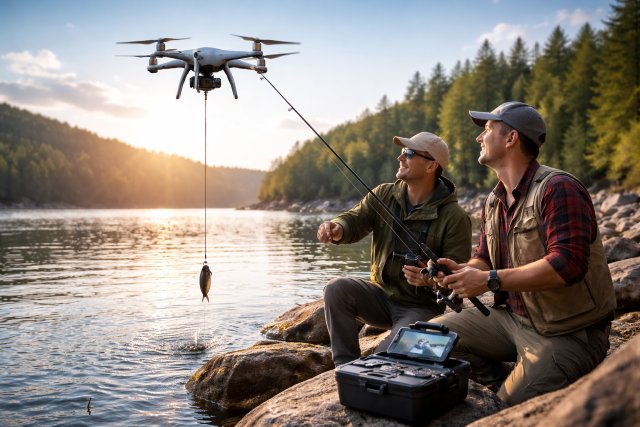
Fishing has always evolved with technology. First it was better reels, then fish finders, then GPS-enabled boats. Now the Fishing Drone is opening a fresh chapter for anglers who want to cast farther, scout water more efficiently, and fish with more precision than traditional shoreline methods usually allow. Modern drone platforms built for fishing can carry bait offshore, hold position with GPS, and return to home automatically, which changes how many people approach surf fishing and hard-to-reach spots.
- What Is a Fishing Drone and Why Is It Different?
- How a Fishing Drone Changes the Fishing Experience
- Key Features to Look for in a Fishing Drone
- Is a Fishing Drone Legal?
- Fishing Drone Benefits for Modern Anglers
- The Downsides You Should Not Ignore
- Practical Tips for Using a Fishing Drone Successfully
- Are Fishing Drones Worth It?
- Conclusion: Fishing Drone as the Future of Smarter Shore Fishing
That shift is happening in a fishing world that is already massive. In the United States alone, the U.S. Fish and Wildlife Service says there were 39.9 million anglers aged 16 and older in 2022, showing just how large the recreational fishing audience remains. As more anglers look for ways to save time, cover more water, and reach productive zones without launching a kayak or boat, the appeal of the Fishing Drone keeps growing.
At its core, a Fishing Drone is a drone adapted for angling. Instead of carrying only a camera, it can also carry a bait release system or fishing payload so the pilot can fly line and bait to a chosen spot, then drop it with far more control than a long cast would provide. Some current fishing-focused models advertise payload capacity around 2 kg, while heavier-lift models advertise roughly 3.2 to 3.6 kg, showing how the category now ranges from practical recreational use to more demanding offshore bait deployment.
What Is a Fishing Drone and Why Is It Different?
A Fishing Drone is not just a regular camera drone used near water. The better ones are purpose-built for marine use, often with waterproof or water-resistant design, GPS stabilization, payload release hardware, and recovery features meant for windy coastal conditions. That matters because beach fishing is rarely calm, and electronics that work beautifully in a park can fail quickly around spray, sand, and gusty air.
What makes the Fishing Drone so attractive is the control it gives the angler. Instead of forcing a cast against wind or current, you can place bait more deliberately over sandbars, channels, or deeper pockets. For surf anglers, that can mean less wasted energy and more consistency, especially on days when distance matters more than brute casting strength. Current product specs in this category commonly advertise flight distances from about 1300 meters to 1500 meters in ideal conditions, though real-world results vary with wind, payload, battery, and local restrictions.
There is also a practical safety angle. Some manufacturers pitch fishing drones as a way to reduce the need to paddle bait out by kayak in rough water. That does not remove all risk, but it can reduce exposure to surf launches or unstable conditions for some anglers. The key is using the drone as a tool for smart positioning, not as a substitute for judgment.
How a Fishing Drone Changes the Fishing Experience
The biggest difference is reach. Shore anglers often struggle to get beyond breakers or into a holding zone where fish are actively feeding. A Fishing Drone can carry bait far beyond what many people can cast, then release it at a more exact point. This is one reason drone fishing has gained attention among surf anglers chasing larger species from land.
The second difference is efficiency. A skilled pilot can inspect water movement, identify likely lanes, and place rigs with better repeatability. Some drone systems also integrate with cameras or other accessories that help users understand water conditions before committing to a drop. Even when the drone is not directly locating fish, it helps anglers fish smarter by improving bait placement.
The third difference is accessibility. Not every angler has tournament-level casting technique, a boat, or safe launch conditions. A Fishing Drone can narrow that gap. It gives ordinary recreational anglers a way to access deeper or more distant water from shore, though results still depend on skill, local rules, species behavior, and conditions on the day.
Key Features to Look for in a Fishing Drone
If you are evaluating a Fishing Drone, payload capacity should be near the top of your checklist. A drone might look impressive in marketing photos, but payload determines what kind of bait, rig, and sinker it can actually carry. Current fishing-drone models on the market show a broad spread, from around 2 kg payload class to roughly 8 lb heavy-lift class, and that difference can completely change the kinds of setups you can deploy.
Water resistance matters just as much. Fishing near the sea means salt spray, damp sand, and occasional rough landings. Several purpose-built fishing drones in the current market advertise IP67 waterproof ratings, which is very different from the exposure tolerance of many consumer camera drones. If fishing is your main use case, marine-ready hardware is more than a luxury. It is a durability decision.
Battery life is another make-or-break feature. Manufacturer listings for current models often cite flight times around 27 to 28 minutes without wind and without load, but fishing flights usually include payload, coastal wind, and careful hovering. In practice, smart anglers treat advertised flight time as a best-case ceiling, not a promise. That mindset helps prevent the most common mistake in drone fishing: flying out confidently and returning with less battery margin than expected.
GPS stability and return-to-home functions also deserve attention. These features help the drone hold its position more reliably and recover safely if signal or orientation becomes an issue. On advanced drone platforms, waypoint and automated mission features are increasingly common too, though anglers should use them carefully and always within the rules for their airspace and line of sight.
Is a Fishing Drone Legal?
This is where many articles stay too vague, but legality is one of the most important parts of using a Fishing Drone responsibly. In the United States, the FAA says recreational drone flyers must follow the rules for recreational operations, complete TRUST, keep the drone within visual line of sight, and follow airspace restrictions. Recreational operators also must fly at or below 400 feet in Class G airspace, and many registered drones must comply with Remote ID requirements unless flown in a FRIA.
The FAA also states that drones weighing more than 250 grams (0.55 lb) generally must be registered for recreational operations, and that registration currently costs $5 and is valid for three years. Since many fishing drones are far heavier than that threshold, registration is not a side detail. It is usually part of the basic setup process.
Beyond aviation law, fishing law matters too. Even if drone flight is legal in an area, fishery rules, park rules, wildlife-protection rules, and local beach regulations may still restrict how or where you can fish. That means a Fishing Drone can be perfectly legal in principle but still unusable in a specific location. Responsible anglers always check local regulations before launching.
Fishing Drone Benefits for Modern Anglers
The clearest benefit is precision. A Fishing Drone helps place bait farther and more deliberately than many shoreline casts. That can improve your presentation in areas where fish hold beyond the breakers, along drop-offs, or in water lanes that are difficult to reach by traditional means.
Another benefit is energy savings. Repeated power casting with heavy sinkers is tiring, especially over a long session. Drone deployment can let the angler focus more on rig choice, timing, and reading the water instead of burning energy trying to reach the same zone over and over. That does not guarantee more fish, but it can make the session more strategic.
There is also a learning benefit. New anglers often struggle with distance, wind, and placement. A Fishing Drone reduces some of that mechanical difficulty and lets them study tide movement, bait positioning, and fish behavior more deliberately. Used well, it becomes part of a smarter system rather than a flashy gadget.
The Downsides You Should Not Ignore
A Fishing Drone is powerful, but it is not magic. Cost is the first barrier. Purpose-built fishing models are specialized products, and the total investment usually includes the aircraft, batteries, chargers, spare props, payload system, and often protective accessories. For casual anglers, that can be hard to justify.
Weather is the second barrier. Coastal wind, salt spray, and changing visibility can turn a simple flight into a stressful one. Even when a manufacturer lists strong wind resistance, real-world safety still depends on payload, battery state, and pilot discipline. Manufacturer specs are useful, but shoreline conditions do not care about marketing language.
The third barrier is skill. A Fishing Drone adds another layer of complexity to the fishing day. You are now managing battery life, flight path, legal compliance, landing safety, and fishing setup at the same time. For some anglers that is exciting. For others, it can distract from the simplicity they love about fishing.
Practical Tips for Using a Fishing Drone Successfully
Start with short practice flights before you ever carry bait. Learn takeoff, hovering, return-to-home behavior, and landing in open space. Coastal fishing is a bad place to discover that you panic under pressure or misread battery levels. The FAA’s guidance on safe recreational flying makes this mindset essential, especially because pilots are expected to maintain line of sight and avoid unsafe operations.
Keep your rig lighter than the advertised maximum payload. Manufacturer payload numbers are not an invitation to fly at the limit every time. Wind, line drag, and battery conditions all affect performance, so staying under the ceiling gives you a healthier safety margin.
Check airspace and local site rules before every session. The FAA recommends using tools such as B4UFLY and LAANC resources to understand airspace restrictions and authorization needs. That step matters even more near beaches, parks, populated shorelines, or any area where airspace or wildlife rules may be tighter than anglers expect.
Finally, treat the Fishing Drone as part of a full fishing system. Pair it with good tide awareness, species knowledge, and sensible bait strategy. Technology can help you place bait well, but it cannot replace understanding where fish feed, when they move, and why they respond. That is still the heart of successful fishing.
Are Fishing Drones Worth It?
For anglers who regularly fish from shore and need extra reach, a Fishing Drone can be genuinely transformative. It can help place bait farther, reduce some physical strain, and make your approach more precise. In the right hands and the right locations, it is not just a novelty. It is a serious fishing tool.
But it is only worth it when the angler is willing to learn the rules and use the technology responsibly. FAA requirements around registration, TRUST, visual line of sight, and Remote ID are not optional details in the U.S.; they are part of operating legally. Add local fishing rules and environmental considerations, and the smartest buyers are the ones who research before they spend.
Conclusion: Fishing Drone as the Future of Smarter Shore Fishing
The Fishing Drone is changing what modern anglers can do from the shoreline. It combines reach, control, and evolving drone technology in a way that makes fishing more strategic and, in many cases, more efficient. With purpose-built models now offering serious payload capacity, waterproofing, GPS stability, and long-range deployment, the category has clearly moved beyond gimmick status.
Still, the best results come when technology and judgment work together. A Fishing Drone is most valuable when it is backed by legal awareness, safe piloting, and real angling skill. Used that way, it truly does unlock a new era of smart fishing.