


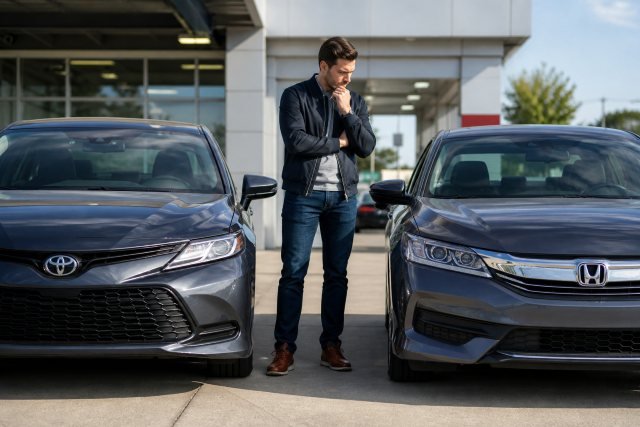
Toyota Vs Honda Reliability is one of the most common debates among car buyers, and for good reason. Both brands have built strong reputations for long-lasting engines, low running costs, strong resale value, and dependable daily driving. But while Toyota and Honda are often mentioned together, they are not exactly the same when it comes to reliability, maintenance costs, long-term ownership, and used-car confidence.
- What Does Toyota Vs Honda Reliability Really Mean?
- Toyota Vs Honda Reliability: Which Brand Lasts Longer?
- Why Toyota Often Wins on Long-Term Reliability
- Why Honda Still Competes Strongly
- Toyota Reliability Strengths
- Honda Reliability Strengths
- Toyota Vs Honda Maintenance Costs
- Toyota Vs Honda Resale Value
- Toyota Vs Honda Engines
- Toyota Vs Honda Transmissions
- Toyota Vs Honda Hybrids
- Toyota Vs Honda SUVs
- Toyota Vs Honda Sedans
- Toyota Vs Honda Trucks
- Used Toyota Vs Used Honda Reliability
- Real-World Buyer Examples
- Common Problems Buyers Should Know
- Actionable Tips Before Buying Toyota or Honda
- Toyota Vs Honda Reliability FAQs
- Is Toyota more reliable than Honda?
- Is Honda cheaper to maintain than Toyota?
- Which lasts longer, Toyota or Honda?
- Is a Toyota Corolla more reliable than a Honda Civic?
- Is Toyota better than Honda for hybrids?
- Which brand has better resale value?
- Conclusion: Toyota Vs Honda Reliability
The short answer is simple: Toyota usually has a slight edge for long-term durability and trouble-free ownership, while Honda often feels more engaging to drive and can be just as dependable when properly maintained.
That difference may sound small, but it matters when you are buying a family car, a used sedan, a hybrid, an SUV, or a vehicle you plan to keep for 10 years or more.
Recent reliability data still supports both brands strongly. Consumer Reports’ latest brand reliability coverage places Toyota near the very top and Honda also inside the top group of dependable automakers. RepairPal also rates both brands highly, with Honda showing an average annual repair cost of about $428 and Toyota around $441, both well below the all-brand average.
What Does Toyota Vs Honda Reliability Really Mean?
When people compare Toyota vs Honda reliability, they usually mean one question: Which brand will give fewer problems over time?
But reliability is not just about whether a car starts every morning. It also includes repair frequency, repair cost, part availability, engine life, transmission durability, electronics, resale value, and how well the vehicle holds up after years of use.
Toyota and Honda both do well because they usually avoid overly complicated engineering in their mainstream models. Their best-selling cars are designed for daily use, not just showroom excitement.
Toyota often focuses on conservative engineering. The brand tends to keep proven engines, transmissions, and hybrid systems in production for years. That can make Toyota vehicles feel less flashy, but it also reduces the risk of unexpected problems.
Honda, on the other hand, often adds a little more driving personality. Many Honda models feel sharper, lighter, and more fun to drive. That performance-focused DNA is one reason people love the Civic, Accord, and CR-V. However, some Honda models with turbocharged engines and CVT transmissions require careful maintenance to stay reliable long term.
Toyota Vs Honda Reliability: Which Brand Lasts Longer?
Toyota generally has the stronger reputation for extreme long-term durability, especially beyond 200,000 miles.
Studies on vehicle longevity frequently show Toyota near the top. iSeeCars’ 2025 longest-lasting vehicle research found Toyota leading among brands most likely to produce vehicles that reach 250,000 miles, with Lexus second and Honda also among the strongest brands. Another iSeeCars study found Toyota had 10 of the top 25 vehicles most likely to reach 250,000 miles, with the Toyota Sequoia ranking especially high.
That does not mean Honda cars fail early. Far from it. A well-maintained Honda Civic, Accord, CR-V, or Fit can easily deliver many years of dependable service. But Toyota has a slightly stronger pattern across trucks, SUVs, hybrids, and economy cars.
This is why models like the Toyota Corolla, Camry, RAV4, Tacoma, Highlander, Prius, and Land Cruiser have such strong used-car reputations.
Honda’s strongest long-life models include the Civic, Accord, CR-V, Fit, Odyssey, and Pilot. They are excellent choices, but Honda reliability can depend more on model year, engine type, and maintenance history.
Why Toyota Often Wins on Long-Term Reliability
Toyota’s main advantage is consistency. The company usually updates vehicles carefully instead of making dramatic mechanical changes too quickly.
That approach helps Toyota avoid some of the reliability risks that come with newer technology. Toyota’s engines are often tuned for longevity rather than maximum horsepower. Its automatic transmissions are usually smooth, simple, and durable. Its hybrid systems, especially in the Prius, Corolla Hybrid, Camry Hybrid, and RAV4 Hybrid, have earned a strong reputation over many years.
Another reason Toyota performs well is parts availability. Toyota sells huge numbers of vehicles worldwide, so replacement parts are usually easy to find. Mechanics are familiar with the brand, and many repairs are straightforward.
For buyers who want a car they can keep for 10 to 15 years, this matters. A reliable car is not only one that avoids repairs. It is also one that stays affordable when repairs eventually happen.
Why Honda Still Competes Strongly
Honda remains one of the most reliable mainstream brands because it builds efficient engines, practical interiors, and vehicles that owners enjoy driving.
Honda cars often feel more responsive than Toyota competitors. A Civic can feel sportier than a Corolla. An Accord may feel more engaging than a Camry. A CR-V often offers excellent packaging, visibility, and comfort.
RepairPal places Honda at the top of its reliability ranking, with an average annual repair cost of about $428. Toyota is also rated highly, with an average annual repair cost of about $441.
That means Honda may not always lose on ownership cost. In fact, depending on the model, Honda can be cheaper to maintain.
For example, RepairPal rates the Honda Civic highly, with an average annual repair cost of about $368. The Toyota Corolla is also excellent, with an average annual repair cost of about $362. In real-world terms, that difference is tiny.
So the Toyota vs Honda reliability debate is not about one brand being good and the other being bad. It is more about small differences in philosophy.
Toyota is usually the safer bet for maximum durability. Honda is often the better choice for buyers who want reliability with a more enjoyable drive.
Toyota Reliability Strengths
Toyota’s strongest reliability advantage comes from its simple, proven mechanical design.
The Toyota Corolla is a great example. It is not the most exciting compact car, but it is one of the most trusted. RepairPal estimates the Corolla’s average annual repair cost at about $362, compared with $526 for compact cars and $652 for all vehicle models.
The Toyota Camry is another strong example. It has long been known as a dependable midsize sedan, and RepairPal lists its average annual repair cost at around $388, below the midsize-car average.
Toyota also has a major edge in hybrid reliability. The Prius helped prove that hybrids could last, and Toyota has expanded that technology across many models. For buyers worried about hybrid battery life, Toyota’s long history in hybrid systems offers extra confidence.
Toyota’s best reliability strengths include:
- Proven engines and transmissions
- Excellent hybrid systems
- Strong resale value
- Long-lasting SUVs and trucks
- Low repair frequency
- Wide parts availability
- Strong used-car demand
Honda Reliability Strengths
Honda’s reliability strength comes from engineering quality, efficient engines, and smart packaging.
The Honda Civic is one of the most trusted compact cars in the world. It offers low running costs, strong fuel economy, and a better driving feel than many competitors. RepairPal gives the Civic a strong reliability rating and lists its average annual repair cost at about $368.
The Honda Accord is also a long-time favorite among sedan buyers. It is comfortable, practical, efficient, and often more engaging to drive than the Toyota Camry.
Honda also does well with compact SUVs. The CR-V has become one of the most popular family SUVs because it combines space, fuel economy, comfort, and strong resale value.
Honda’s best reliability strengths include:
- Efficient engines
- Strong fuel economy
- Enjoyable driving experience
- Practical interiors
- Low repair costs
- Strong Civic, Accord, and CR-V reputation
- Excellent resale value
Toyota Vs Honda Maintenance Costs
Maintenance cost is one of the biggest factors in real-world reliability.
A car may be reliable, but if parts are expensive or repairs are complicated, ownership can still become frustrating. Fortunately, both Toyota and Honda are affordable compared with many American and European brands.
RepairPal lists Toyota’s average annual repair cost at about $441, while Honda’s brand average is about $428. Both are lower than the all-model average of $652.
That means Honda can be slightly cheaper by average annual repair cost, while Toyota may still win in long-term durability and fewer major problems.
The real answer depends on the model.
A Corolla and Civic are both cheap to maintain. A Camry and Accord are both reasonable. A Toyota Land Cruiser, however, costs more to maintain than a Corolla because it is larger, more complex, and built for a different purpose. RepairPal lists the Land Cruiser’s average annual repair cost at about $843.
So buyers should not judge by brand alone. Compare the exact model, engine, transmission, mileage, and service history.
Toyota Vs Honda Resale Value
Toyota usually has a slight advantage in resale value, especially for trucks, SUVs, hybrids, and economy cars.
Used Toyota models often sell quickly because buyers trust them. A used Corolla, Camry, RAV4, Prius, Tacoma, or Highlander can command strong prices even with higher mileage.
Honda also holds value very well. The Civic, Accord, and CR-V are popular in the used market because they are efficient, practical, and known for durability.
The difference is that Toyota’s reputation for “boring but bulletproof” reliability often makes buyers more comfortable paying extra for an older Toyota. Honda’s resale value is still strong, but some buyers may be more careful with turbocharged models, CVTs, or vehicles with incomplete service records.
For sellers, this is good news either way. A well-maintained Toyota or Honda will usually be easier to sell than many rival brands.
Toyota Vs Honda Engines
Toyota engines are often tuned for smoothness, durability, and lower stress. They may not always feel powerful, but they are usually built to last.
Honda engines have a different personality. They are often more responsive, efficient, and enjoyable. Older naturally aspirated Honda engines are especially loved for their durability. However, some newer Honda turbo engines may need more careful oil changes and maintenance habits.
That does not mean Honda turbo engines are bad. It simply means buyers should be more attentive. Turbocharged engines create more heat and pressure than traditional naturally aspirated engines. Skipping oil changes or using poor-quality oil can lead to problems over time.
If you want the simplest long-term ownership, a naturally aspirated Toyota engine is often the safest choice.
If you want a reliable car that also feels lively, Honda may be more appealing.
Toyota Vs Honda Transmissions
Transmission reliability is another important difference.
Toyota has a strong reputation for traditional automatic transmissions and hybrid e-CVT systems. Toyota’s hybrid e-CVT design is especially respected because it is mechanically simpler than many conventional automatic transmissions.
Honda transmissions have improved over the years, but some older automatic transmissions and certain CVT applications have received mixed feedback depending on model year. Modern Honda CVTs can be reliable, but they need proper fluid changes and careful maintenance.
This is especially important when buying used. A Honda with a full transmission service history is far more attractive than one with unknown maintenance.
For used Toyota buyers, transmission history still matters, but Toyota generally gives buyers a little more confidence in long-term durability.
Toyota Vs Honda Hybrids
Toyota is the stronger choice for hybrid reliability.
The Prius gave Toyota a major head start in hybrid technology. Over time, Toyota refined its hybrid systems and used them across the Camry, Corolla, RAV4, Highlander, Sienna, and other models.
Honda also makes good hybrids, including hybrid versions of the Accord and CR-V. Many Honda hybrids are efficient and pleasant to drive. But Toyota has a longer and broader hybrid reliability record.
If your main concern is buying a hybrid that will last for many years, Toyota is usually the safer pick.
If you prefer Honda’s driving feel and find a well-maintained Honda hybrid at a good price, it can still be a smart buy.
Toyota Vs Honda SUVs
In SUVs, Toyota has a strong reliability reputation across several segments.
The Toyota RAV4 is one of the most popular compact SUVs. The Highlander is a dependable family SUV. The 4Runner and Land Cruiser have strong reputations for toughness, although they may cost more to fuel and maintain.
Honda’s SUV lineup is also strong. The CR-V is practical, efficient, and comfortable. The HR-V is simple and city-friendly. The Pilot gives families three-row space and a smoother road feel than some Toyota alternatives.
For long-term durability, Toyota SUVs often have the edge. For comfort, interior packaging, and daily driving feel, Honda SUVs can be more appealing.
Toyota Vs Honda Sedans
For sedans, the comparison is very close.
The Toyota Corolla and Honda Civic are both excellent compact cars. The Corolla is usually the safer reliability choice. The Civic is often more fun to drive and may feel more modern inside.
The Toyota Camry and Honda Accord are also close rivals. The Camry leans toward comfort and long-term dependability. The Accord often feels sharper and more premium from behind the wheel.
If you want a simple commuter car with minimal drama, choose Corolla or Camry.
If you want reliability with a more enjoyable driving experience, choose Civic or Accord.
Toyota Vs Honda Trucks
Toyota clearly wins in trucks because Honda does not compete as deeply in this category.
The Toyota Tacoma and Tundra have strong followings, especially among buyers who want durability and resale value. Toyota trucks are known for lasting a long time, especially when maintained well.
Honda’s Ridgeline is comfortable, practical, and surprisingly useful, but it is not a traditional body-on-frame truck like the Tacoma or Tundra. It is better for daily driving and light-duty use than heavy towing or off-road abuse.
If you want a rugged truck, Toyota is the better choice.
If you want a comfortable pickup for everyday life, the Honda Ridgeline may still make sense.
Used Toyota Vs Used Honda Reliability
Used-car buyers should be careful with both brands because even reliable cars can become risky if neglected.
A poorly maintained Toyota is not automatically better than a well-maintained Honda. Service history matters more than the badge.
When buying used, check oil-change records, transmission service, accident history, tire wear, suspension condition, brake condition, warning lights, and whether the vehicle has been modified.
For Toyota, pay attention to hybrid battery condition, frame rust on trucks, and maintenance records on high-mileage SUVs.
For Honda, pay attention to CVT fluid changes, turbo engine maintenance, air conditioning issues on some models, and timing belt service on older V6 engines.
The best used car is not always the lowest-mileage one. A higher-mileage Toyota or Honda with complete service records can be a better buy than a low-mileage car with unknown history.
Real-World Buyer Examples
Imagine two buyers.
The first buyer wants a basic commuter car for work, school runs, and weekend errands. They do not care much about sporty handling. They want the lowest risk possible. For this buyer, a Toyota Corolla, Camry, or RAV4 may be the better choice.
The second buyer wants a reliable car but also enjoys driving. They want sharper steering, a more energetic engine feel, and a cabin that feels slightly more engaging. For this buyer, a Honda Civic, Accord, or CR-V may be the better match.
Now imagine a third buyer looking for a used hybrid. In that case, Toyota usually becomes the stronger recommendation because of its longer hybrid track record.
A fourth buyer wants a used family SUV. Both a Toyota Highlander and Honda Pilot can work well, but the Toyota may hold value better, while the Honda may offer a smoother and more spacious family feel depending on the model year.
Common Problems Buyers Should Know
Toyota vehicles are reliable, but they are not perfect. Some models have had oil consumption issues, infotainment complaints, paint concerns, hybrid battery aging, or truck frame rust in certain years.
Honda vehicles are also reliable, but some models have had CVT concerns, air conditioning problems, oil dilution complaints in certain turbo engines, and transmission issues in some older models.
This is why model-year research is important. Do not buy based only on brand reputation. A reliable brand can still produce a weak model year.
Before buying, search for the exact year, model, engine, and transmission. Also check recall history through official safety databases and ask for a pre-purchase inspection.
Actionable Tips Before Buying Toyota or Honda
Before choosing between Toyota and Honda, decide what kind of ownership experience you want.
Choose Toyota if you want the lowest-risk long-term vehicle, strong resale value, proven hybrid technology, and simple daily dependability.
Choose Honda if you want strong reliability with better driving feel, smart interior space, good fuel economy, and slightly more personality.
For used vehicles, never skip a mechanic inspection. Even a reliable brand can hide expensive problems.
Also, avoid heavily modified cars. A modified Civic or Tacoma may look exciting, but modifications can reduce reliability and make future repairs more complicated.
Finally, do not ignore maintenance. Oil changes, transmission fluid, coolant, brake fluid, tires, and suspension care make a huge difference. Toyota and Honda vehicles last longest when owners follow proper service schedules.
Toyota Vs Honda Reliability FAQs
Is Toyota more reliable than Honda?
Toyota is generally considered slightly more reliable overall, especially for long-term durability, hybrid systems, trucks, and high-mileage ownership. Honda is still one of the most reliable mainstream brands and can be just as dependable with proper maintenance.
Is Honda cheaper to maintain than Toyota?
Honda may be slightly cheaper by average annual repair cost. RepairPal lists Honda at about $428 per year and Toyota at about $441 per year, both below the all-model average. However, costs vary by model, age, mileage, and maintenance history.
Which lasts longer, Toyota or Honda?
Toyota usually has the edge for extreme longevity. iSeeCars ranks Toyota first among brands most likely to produce vehicles that reach 250,000 miles, while Honda also ranks very strongly.
Is a Toyota Corolla more reliable than a Honda Civic?
Both are excellent. RepairPal rates both highly, with the Corolla averaging about $362 in annual repairs and the Civic about $368. The Corolla is usually the safer reliability pick, while the Civic often feels more fun to drive.
Is Toyota better than Honda for hybrids?
Yes, Toyota usually has the stronger hybrid reliability reputation because it has more experience and a longer track record with hybrid systems. Honda hybrids are good too, but Toyota is often the safer long-term hybrid choice.
Which brand has better resale value?
Both Toyota and Honda have strong resale value. Toyota often has a slight edge, especially with models like Corolla, Camry, RAV4, Prius, Tacoma, and Highlander.
Conclusion: Toyota Vs Honda Reliability
When comparing Toyota Vs Honda Reliability, the honest answer is that both brands are excellent. You are not choosing between a reliable brand and an unreliable brand. You are choosing between two different approaches to dependable car ownership.
Toyota is the better choice if you want maximum long-term durability, proven hybrid systems, stronger truck and SUV longevity, and the safest used-car bet.
Honda is the better choice if you want reliability with a more enjoyable driving experience, practical interiors, efficient engines, and strong ownership value.
For most buyers, Toyota has the slight reliability advantage. But a well-maintained Honda can easily be a smarter purchase than a neglected Toyota.
The best decision is to compare the exact model, model year, engine, transmission, mileage, service history, and price. Brand reputation helps, but the condition of the individual car matters most.